Activity
Mon
Wed
Fri
Sun
Nov
Dec
Jan
Feb
Mar
Apr
May
Jun
Jul
Aug
Sep
Oct
What is this?
Less
More
5 contributions to Has2BGreen

18h •
We have a new member!
Please welcome @Gil Gily I love it when new members join - it reminds me to update you all on what I am up to. So much is going on. The more I do this the broader the subject becomes and the number of spinning plates that need to be kept spinning keeps increasing. I have an idea of seven key topics I want to address in the real world: Food sustainability Drought Excess water - flood Excess heat AI impacts on the environment and employment Social breakdown and everyday life in a changing climate. On food, I am looking at our local town and realising that we live in a food desert - we are not short of food; the issue is that all our food is trucked in. Hardly any of it is grown locally. So, I have been working on how we could expand on local production. The idea is to find a farmer willing to switch from cattle fodder to vegetables and grain for human consumption, with sales direct to the customer. I am looking for a farmer willing to give this a go, and to help cover the risk, I’m recruiting 200 families willing to pay a monthly subscription of, say, £15. This gives the farmer a guaranteed income and reassures them enough to invest in the infrastructure needed to make this work. I have been speaking to people running allotments - these are fields that have been partitioned into small areas - allotments - that are then taken on by locals to use as they wish. Most grow vegetables, some plant fruit trees and others grow flowers. I am suggesting that each allotment owner "plants an extra row" and offers this for free or at a price to a community shop. Better yet, we could start coordinating what needs to be grown and when. We are looking at creating a community farm. This is where a group of people combine efforts to farm an area of ground - sharing the work and the produce. Drought - we know that next summer will be far worse than this one just passed. El Niño will most likely give us a longer, hotter summer. So I have been looking at how we collect more rainwater in the next couple of months to help us get through the dry season. Just saying that seems so surreal when we are talking about wet old England.


0 likes • 9h
Welcome @Gil Gily !
14d •
💧 Learning to Live With Water Stress
The final article in our Water Stress series is now published. This whole investigation began with a dead frog in my garden. Then I noticed a struggling tree. A local pond dried out. Its bullrushes were dying and a dragonfly was searching for food around a habitat that had disappeared. Nearby, a stream had shrunk to a fraction of its normal flow. Eleven articles later, I don't see these as separate incidents anymore. They are connected parts of a changing water system. Along the way we've explored wildlife, farming and food production, wildfire, housing, reservoirs, water recycling, aquifers, winter rainfall and what happens when there simply isn't enough water to meet every demand. But this final article is about what we do with everything we've learned. One idea has gradually emerged: Slow it. Spread it. Sink it. Store it. Share it. The first four are about how we manage water. The last one is about how we manage ourselves. Because sharing doesn't just mean deciding how much water goes to homes, farms, businesses, rivers and wildlife. Increasingly, we may have to think about sharing water between communities. If one town invests in storage, reduces waste and looks after its water while another doesn't, what happens when the second town runs short? Do we start talking about our reservoir, our river, our aquifer and our water? I hope not. But sharing has to come with responsibility too. If we expect other communities to share their water when we need it, we have a responsibility to look after the water we have when we don't. Perhaps that is one of the biggest lessons I've taken from this series. Water resilience isn't something we can build behind a boundary and keep for ourselves. Rivers, aquifers, food, energy and communities are interconnected. And nature has to be part of that sharing agreement too. The frog, pond, dragonfly, trees and stream that started this investigation all need their share. 🔗 Read Article 11 — Learning to Live With Water Stress

1 like • 8d
"Water stress" other than the utility bill? 😉
Jul 30 •
Environmentalists Vs Farmers - new articles
I realised something recently. There seems to be an increasing divide between farmers and environmentalists. Yet when you speak to people on both sides, they often want the same things: healthy soil, clean water, thriving wildlife and a secure future for food production. So I decided to learn more. I started with a single crop—wheat. I wanted to understand the journey from planning and planting, through to harvest, and discover the pressures farmers face every day. What I found surprised me. The first article in my new Stories from the Farm series is now available in the Classroom. I'd love to hear your thoughts. Do we understand farming well enough to have the conversations we're having about food, climate and the countryside? You can find it here 👉

3 likes • Jul 31
https://youtu.be/8LsVq-HOhzo
Jul 7 •
New Member!
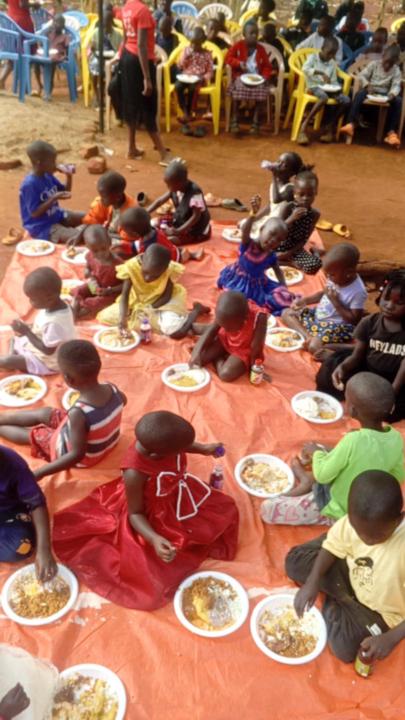
Please welcome @Elizabeth O'Carroll She and I work on another Skool project: Grace 4 Africa Child Care We are seeking support for an orphanage in Africa. The orphanage has been catering for children who were formerly on the street. The pastor in charge, Pastor Biyinzika Dan, took some home to help them get off the streets, and shortly afterwards he found that many had siblings who also needed help. Soon he realised he needed more space. Now he has over 30 orphans staying under his roof and a further 35 who are with guardians living locally. He finds funds to feed them and help them into a local school. He is working to increase the number of supporters by connecting people directly with the children so they can follow the child's progress and send messages of support. In return, they get messages about the progress being made and the activities that the children get up to. We send funds through a funding app. But the connection is kept via Skool. And now Elizabeth has joined us - Welcome!
2 likes • Jul 8
Welcome to the community Elizabeth.
Jun 11 •
Please welcome our newest member!
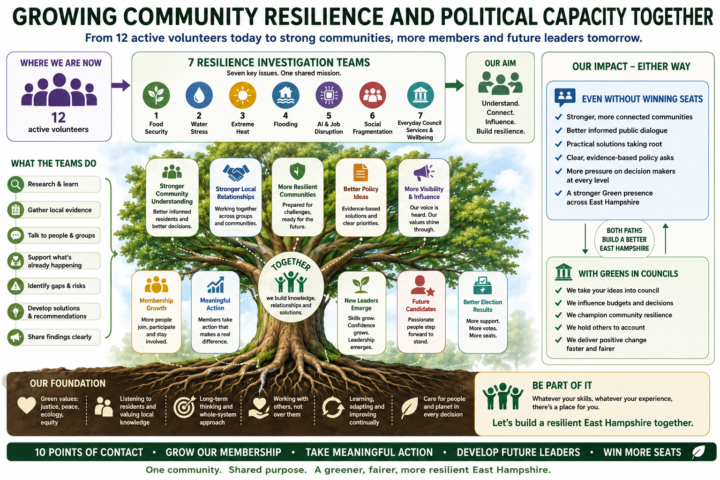
Welcome @Adam Nealis, who is based in Thailand. As Adam joins us I have been preparing focus groups within our local Green Party to work on key areas of the Climate Crisis at a local level. The idea is to translate global and national issues into local narratives. How are these huge events playing out, or going to play out, in our local communities? What actions can we take now as a political party, but also in collaboration with our fellow citizens, to start mitigating the worst effects and preparing for or adapting to effects that we cannot avoid? The energy in our local group is growing. The seemingly thankless task of political campaigning is made bearable by becoming more active and making these connections. The food in our town is 95% imported from elsewhere - we think. Now we start the work of determining the real number. The next step is working with local growers to increase the amount of food we produce for local consumption. To do that, we need to know who is already working on this and what help they need to make it happen. One example might be to get around 100 families to commit to buying produce from a local grower; this guarantees the grower's income and allows them to change how they farm. Making the variety of crops wider. The risk diminishes for the farmer, and clients/supporters know exactly how many "food miles" their food has travelled. Through this work, we learn more about the fragility of our food supplies and make changes to reduce the risk of food shortages. Our party members feel that at last they are doing more than making donations and voting once every few years - they can see the results. Now, when they vote, they have a better idea of who they are voting for. Even if we are not elected to office, we will have changed the outcome for our community.
1 like • Jun 12
Hello everyone. Happy to be here.
1-5 of 5
@adam-nealis-6562
I'm mainly bio. Completely organic. Learning to garden and also to invest. So far, the latter is easier than the former.
Active 9h ago
Joined Jun 11, 2026
ISTJ
phon na kaeo