Activity
Mon
Wed
Fri
Sun
Sep
Oct
Nov
Dec
Jan
Feb
Mar
Apr
May
Jun
Jul
Aug
What is this?
Less
More
Pilot Mastery Lab
160 members • $47
21 contributions to Pilot Mastery Lab
3d •
Who helped you? - The intentionality of growth
"You're a good man, Charlie Brown." That was my chief pilot's version of a pep talk. I was young, low time, and convinced I was one mistake away from being found out. I met Jim Bennett again this summer, at a job fair, almost 15 years later. He probably doesn't remember saying it. I never forgot it. And the power of his words live on in my work. Here's what I've learned since: the voices you let speak into your life get power whether you hand it to them consciously or not. Walk with the wise and you become wise. Walk with the cynical and you inherit the cynicism, usually without noticing. Jim built people up on purpose. His standards were high, absolutely - but his character was the foundation that enabled many careers to grow. Twenty years into this career, I've gotten more deliberate about who gets that access. The job you take, the crew you fly with, the person you have coffee with at 5am. Those are all the same decision, made repeatedly, and they shape you through the trust you allow them in enoucraging or holding you accountable. If you want to grow, make them count. Who said something to you early on that you're still carrying? Or perhaps a recent encouragement or act of accountability that was shared in confidence? Reach out to them, and let them know! Some of them have no idea. PS: For me - my wife, my dad, my best friend - and a few aviation mentors along the way!

0 likes • 1d
JD, you said,”The voices you let speak into your life get power wether you hand it to them consciously or not.” Absolutely! This brings to mind the childhood saying, “Sticks and stones may break my bones, but names will never hurt me.” As children, we were taught to believe that words couldn’t really hurt us. But that simply isn’t true. What we say to someone has power. Our words can lift someone up, give them confidence and make them feel valued, or they can tear them down and leave wounds that may last much longer than we realize. I have been on the receiving end of the latter many times. Unfortunately, the negative things people have said to me have often stayed with me far longer than the positive things people have said. Those voices can become part of the narrative we tell ourselves if we allow them to. What I have come to realize, though, is that I get to choose which voices I give power to. Someone else’s criticism, negativity or hurtful words don’t have to define who I am. In many cases, those words may say more about the person speaking them—their own insecurities, frustrations or lack of something—than they ever did about me. That doesn’t mean the words don’t hurt. It means I don’t have to carry them forever. For me, taking the lead means becoming aware of my own narrative and being intentional about whose voice I allow to speak into my life. I can acknowledge what was said, learn from it if there is something to learn, and then decide whether it deserves a permanent place in my story.
11d •
The paradox shift of a healthy culture
Hope everone is having a fantastic start of the week! Hot on the heels of last week's SMS workshop, we'll be continuing with the CAM schedule this week and getting after HR! First however, I hope this bit is as insightful to you as it was to me! What is, in your opinion, the most important part in achieving "buy in" for a healthy safety culture?

2 likes • 7d
Psychological safety is key and built through trust and consistency. I need to be willing to listen, accept being challenged, admit when I’m wrong, and make it safe for others to speak up—even when what they have to say is difficult. To me, that is very much Take the Lead: Own the environment. Be curious. Stay humble. Have the courage to hear what you may not want to hear. And support the person who had the courage to say it.
1 like • 6d
What I have learned about myself is how my personality type works and interacts with other personalities. I find myself building on this in my relationship with my First Officer. We have created psychological safety by being open to giving and receiving constructive feedback from each other. The hardest part for me is interacting with D (or A, depending on the test you take) personalities. As a non-confrontational person, I can sometimes avoid the tough conversations until I remind myself to “Take the Lead” and find the courage to speak up.
16d •
Live Workshop📢 SMS Investigations made simple (and useful!)
The safety work that eats your week, systematized into an hour https://www.skool.com/live/wymS3QWRlYK If you manage an operation, you already know the problem. Running a real SMS takes time you do not have. Reading the report properly, asking the right questions, digging to an actual root cause, writing something defensible, closing the loop with the crew. Done well, one occurrence can eat a week of stolen hours. So it gets done partially, or inconsistently, or it lands in the folder. I spent years as a chief pilot refining a different way. Not a shortcut, a system: a repeatable investigation process, honed on real occurrences in a busy operation, that produces consistent, defensible safety reports and actual operational changes, without you having to re-think the method every time. The thinking is built into the process. You bring the report; the system carries the discipline. Tomorrow I am handing you that system. Thursday, August 13 · 11AM ET · live in the community. Here is what you get from this hour: - Your time back. The full investigation flow, from first interview question to finished report, systematized into prompts you run step by step. What used to take a week of stolen hours becomes a focused session, and the quality goes up, not down. - Consistent outputs. Every investigation follows the same disciplined path: evidence first, no blame, hazards named, root cause traced, findings tied to training. Your reports stop depending on how much energy you had that week. - The understanding underneath, compressed. The regulatory map (FAA, Transport Canada, IS-BAO, and where the 2024 rules put you), the four pillars as practical moves, and the feedback loop that keeps crews reporting. The depth that took me years to assemble, in one guided hour. - The pivot most operations never make. How to ask what went right, and how years of reports, FRAT data, and trends become safety intelligence: the point where you stop reacting to the last event and start preventing the next one. - The complete take-home. The Investigation Walkthrough: a real, fully de-identified occurrence from my own files, worked end to end, with every prompt in the chain, the actual interview transcript, and the feedback scripts. Read it once, then run it on your own reports.

1 like • 16d
Based on how I’ve been handling SMS at Private Air, my first 48 hours are essentially triage, not investigation. I acknowledge the report, determine whether there is any immediate safety risk, gather the basic facts, and identify what information is missing. I then decide whether it requires escalation, a formal evaluation, corrective action, or simply monitoring. Most importantly, I avoid jumping to conclusions or blame before I understand what actually happened.
22d •
Domain V - Ops Part 3 Workshop
Hi everyone! 👉 Find the full resources and handouts on the recording page here. The final workshop recording for Domain V (Ops) is now available. Thank you @Matt Lockhart and @Scott Iwaniuk for joining today!

1 like • 22d
@Jean Denis Marcellin oh I see, I was wondering if it was FAA. so we’re both right lol
1 like • 22d
My pleasure. I’m Enjoying what I can glean from the videos.
Jul 29 •
Domain V Live Workshop - Part 2 (July 30th, 11AM EST)
I've actually been there. The phone call, during a snow storm. Thankfully, nobody got hurt (and the plane was fine) but we now had an emergency on our hand where a disabled aircraft needed rescuing after arriving in blizzard conditions and finding itself in a snowbank. The clock was ticking, and we needed to coordinate across multiple departments to ensure safe retrival as well as to protect our brand reputation. Once the aircraft was back warm and dry in a hangar, the real work began - the SMS investigation that would help us proactively protect our stakeholders ever more efficiently. What holds a department together in that hour is not courage and it is not improvisation. It is a plan that was written and rehearsed before anyone needed it. That is where we go tomorrow. Domain V, Part 2: OPS4 (Emergency Response Plans) and OPS5 (Safety Management Systems). Thursday, July 30 · 11AM ET · live in the community. Here is why I am giving these two equal depth. Most candidates study the SMS hard and treat the ERP as a checkbox. The real exam tests the ERP at the same granularity as the SMS. They are not two competing topics. They are one safety architecture seen from two angles, and this session is the safety core of the whole course. What we will cover: - The priorities of work, in order, and the second slot that costs people the point. - Why "all-hazards" does not mean what it sounds like it means. - Who the company's highest responsibility actually is in the first hour, and why it is not who feels loudest. - NTSB Part 830: accident versus incident, the dollar threshold that does not exist, and the notification triggers the exam baits. - The exercise ladder, and the difference between the most thorough exercise and the most common one. - The real goal of an SMS, which is not "make us safer." - The four pillars, in order, with the sub-element counts, drawn from a blank page. - Who holds the final risk-acceptance call. It is not the safety manager, and it is not you. - Just Culture, and the reason it is not a no-blame culture.

1 like • 29d
Good morning JD! I would love to sit in on this one as the newly minted SMS manager but I am not sure if time will Allow it. If I am unable to attend will this event be recorded for later viewing?
1-10 of 21
@craig-borkowsko-4360
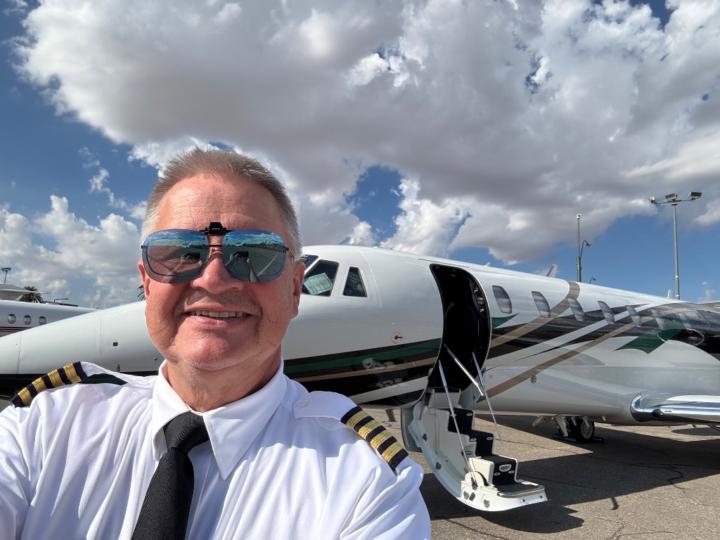
I am an experienced corporate pilot with over 14000 hours. My goal on every trip is client comfort and safety.
Active 1d ago
Joined Oct 4, 2025
Powered by