Activity
Mon
Wed
Fri
Sun
Nov
Dec
Jan
Feb
Mar
Apr
May
Jun
Jul
Aug
Sep
Oct
What is this?
Less
More
Chase AI Community
79.9k
Free
Decster - Agents for Skoolers
220
5.0
Free
The Gut Mechanic
13
Free
Constellations
102
Free
Clief Notes
50.9k
5.0
Free
347 contributions to Clief Notes

👑
9h •
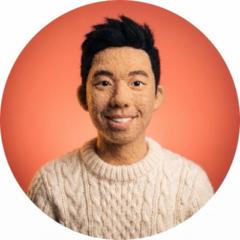
I took my favorite writings and turned them into a video!
So instead of making scripts or such I just took my favorite blog posts and decided to start making videos from them . I spend so much time writing, thinking building with them it already has all the good stuff that I need in a script, the last part is voice and animations! Also new character tell me what you think? https://youtu.be/7Ds2ZJD37KY?si=hSQrHlUKhMAWeYmB
4 likes • 9h
Yes the new character is a better representation of your identity while still keeping the 16-bit style. The videos get better and better.
3 likes • 9h
@Jake Van Clief what did you change you can share with us?

0 likes • 10h
Briliant work!
10h •
The demo you may have missed, and a tool to break, and a huge thanks.
Most of you who follow me know I run my agency Collideascope on an ICM. Fewer know about the fork: Collideascope's Brand Guardian, an MCP our clients use. Once we uncover a client's brand voice and write it down, it lives in the MCP and connects to whatever harness they work in. Almost 2 years in development, we soft-launched in the spring, then took our own medicine. We interviewed our customers, listened to why they buy from us, and rewrote our messaging from that. It changes how we sell. We also now offer AI enablement alongside brand messaging and the Brand Guardian. The result is a new website. https://collideascope.co/brand-messaging/ None of this would be possible without Jake and the Clief Notes community; I've learned so much over the last 8 months. I also wanted to share The Office demo. A lot of you missed the live Office demo this summer. Part of it is in the Bullhorns & Bullseyes season finale, which went live today, and the Dunder Mifflin demo starts around 43:45. Mid-demo at 55 min, Anthropic went down. I opened the same folder in ChatGPT Codex, where I'd never run it. It routed the task to Ryan's room, checked for a price sheet, and wrote back-to-school posts for the seasonal paper discount. It pulled the brand voice from the files without being asked. The unscripted demo proved that files and folders are what matter, not the tool you're using. https://bullhornsbullseyes.com/p/s3e8-the-synthesis-of-systems Last, a favor. Dusty is one of the roles in my ICM whose job is Governance. We built an AI readiness assessment which is now live: 17 questions, no name or email required, and Dusty is alongside to chat while you go. Play with both and tell me what you think, including what breaks. I'm not asking anyone to buy anything. I want feedback from people who build these things. https://dusty.collideascope.co
6d •
Build notes: a 93-second explainer on Jake's Animation & Voice Workspace
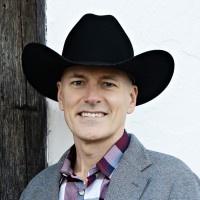
Finished a 93-second animated explainer on Jake's Animation & Voice Workspace from the Premium Vault. It's the first one I'm putting out in public. Video's attached. Notes on each of his five stages, then the idea itself. Voice. I recorded the narration myself in one take: 87 seconds, used untrimmed. Before I recorded, the script was fact-checked against the official transcript of Sinek's talk, and Tom approved his quote. Timed words. Transcribed to word-level timestamps. The transcriber dropped five short words I said that weren't in the script, like "but" and "TED." Those went back in so the word timings match the recording. Storyboard. 35 cues, each tied to a phrase in the audio. A faceless speaker draws the Golden Circle for the first 32 seconds. My cowboy narrator takes over the board at 0:32, right after Sinek's line. Scene. Drawn in code in the browser, in our Bullhorns & Bullseyes style. The Golden Circle is drawn as a bullseye. No Sinek likeness, no TED branding, and an ILLUSTRATION tag on the scenes. Render. On the first preview the close rushed. The arrow that lands in the center was on screen for under two seconds before the end card. Fix: padded the voice with six seconds of silence, moved the end card to start after the last word, and slowed the arrow. The arrow now holds about five seconds before the end card, and the end card holds almost six, enough room for YouTube end screens. I signed off before each next step ran: the take, the transcript, the storyboard, and two previews of the scene before the final render. Claude Code did the file work inside each stage. If you're making one, leave five or six seconds of quiet at the end of the voice before you build the scene. The idea: Sinek's line is "People don't buy what you do; they buy why you do it." I took that literally. I created my company's purpose in a boardroom, led my marketing with it, and nothing changed. Tom's version: "It's not your why. It's not your mission statement. It's not why you exist. It's the customer's why." Lead with your own why and your ads talk past the reason the customer came, so you pay more to win each one. Ask customers why they buy from you, write it down in their words, and put their why in the center of the circle.
1 like • 5d
@Jeff Van Leenen Jake did the work, just follow his lessons. This didn’t take me long, a few hours.
0 likes • 5d
@Ruben Aguirre no 9 by 16 the mobile version. That is done. There are more stories in the works I’m going to build after the weekend. For now I’m enjoying some fall colors in northern Michigan
5d •
I animated a dragon story with code 👨💻🐲
I took a hand-drawn dragon reel I loved (animation by Karlotta Freier, on IG) and tried to rebuild the *style* using only code: no AI image or video generation, no hand animation. The dragon, the story and the music are our own; her reel was the bar to measure against. Here's how it came out: https://youtu.be/hPW_uHlBakI What I learned: 1. Threejs can be use for animation 2. Side-by-side with the reference helps with consistency 3. Credit the creator, make the thing yours. It took 8 versions to get here, and it's still not her level. That gap is the lesson. 📅 I'm back this Saturday for Vibe Film Session 4, 2:30–4:30 PM MT, same Zoom link as always. We'll get into memory: how to keep your character, props and world consistent across every shot. https://www.skool.com/cliefnotes/vibe-film-saturday-sept-5-430-pm-et?p=dd094a57 What's one thing you've tried to copy recently that turned out harder than it looked? Throw it in here and I might use it in the session!
1 like • 5d
Beautiful, very smooth.
1-10 of 347
@curtis-hays-2010
Catalyst helping businesses find the truth beneath their growth problem. Agency founder. Podcast host.
Active 5h ago
Joined Apr 2, 2026
INTP
Michigan
Powered by