Activity
Mon
Wed
Fri
Sun
Nov
Dec
Jan
Feb
Mar
Apr
May
Jun
Jul
Aug
Sep
Oct
What is this?
Less
More
Owned by Jeff
Learn how schools, ED foundations, and donors can use educational tax credits like the PA EITC and the federal Education Freedom Tax Credit.
Skoolers
152.9k
Free
Founder X Pro
169
Free
28 contributions to FundEDU.org

3d •
Governor Shapiro, Let Pennsylvanians Support Pennsylvanians!
Governor Shapiro, for the better part of the last year, you and your administration have given the same answer whenever you were asked about Pennsylvania’s participation in the Federal Scholarship Tax Credit. In particular; you wanted to see the federal rules first. To some extent, that approach made sense while things were still being worked out. After all, if we want to ensure that the FSTC program is effectively administered and administered, leaders at all levels needed clarity about student eligibility, Scholarship Granting Organizations, and how the federal program would interact with the tax-credit system Pennsylvania already operates. At long last, those answers are now here, and they are better than we expected! Just last week, on October 1, Treasury and the IRS released the initial regulations governing state participation and SGO procedures. While these temporary and proposed rules are still open for public review and comment, they give us significant insight into both the size and scope of the FSTC program. Among the most exciting surprises, the donor incentive is going to be much larger than many of us expected. Instead of restricting donations to a $1,700 limit per tax return, the Treasury is allowing donations from both spouses if filing a joint return. As such, this allows both spouse to contribute the $1,700 donation, which means a married couple donating, and filing jointly could donate up to $3,400! Beyond that, given that this is a federal tax credit, there is an important feature to keep in mind. Namely, a donor does not have to live in the state where the SGO they donate to operates. However, the scholarships funded by those donations must serve students in the state where that SGO is listed. As such, and as it currently stands, eligible Pennsylvanians will be able to receive the federal credit by donating to an eligible SGO in states like Ohio, or West Virginia. But as long as Gov. Shapiro continues to refuse to opt us in, none of those donations will reach Pennsylvanian students. Simply put, Pennsylvania can sit this program out while Pennsylvanians still help fund education somewhere else.
1
0

7d •
A New Scholarship Should Not Rewrite Your Financial Aid Policy by Accident - By Larry Furey
The first Education Freedom Tax Credit scholarship that shows up in your community is going to create a question for your admissions team: What happens to the financial aid the school already gave them? Admittedly, this isn’t the most exciting question surrounding the EFTC, but then again most important questions aren’t. However, in my experience, people only start asking the boring questions the moment there is real money attached to them, instead of when there is plenty of time to prepare! Many of our private schools already have existing systems to help make tuition affordable. Some have formal need-based programs. Others combine institutional aid, endowed scholarships, parish support, and even emergency assistance depending on the unique circumstances presented by each family. As such, those decisions are far more important than just accounting. They say, and show, something about the school's mission and the way in which the school engages with and serves its community. Beginning in 2027, and for over half of the country, an SGO-provided scholarship is becoming another part of that equation. For the first time in US history, private-school tuition is an eligible expense through a federal program, but the EFTC does not tell a school what to expect, or how to coordinate a third party scholarship alongside financial aid coming from its own budget or endowment. Instead, that decision belongs to the school, subject to its existing aid policies and any requirements the SGO-partner places on its scholarships. For example: Consider a family receiving $6,000 in institutional aid for the 26-27 academic year. Then, in advance of the 27-28 academic year, the same family applies for and is awarded a $3,000 EFTC scholarship from your partner SGO. Do you leave last year's $6,000 award in place? Reduce it? Redirect some of the institutional aid for another family who didn’t get an outside scholarship? Does the answer change if the school's scholarship came from a donor-restricted endowment?
1
0

10d •
Before You Choose an EFTC Partner, Ask What They Are Actually Going to Do
For the past nine months, school leaders have been trying to understand what the Education Freedom Tax Credit is. They have been asking who qualifies, what scholarships can pay for, what an SGO does, and where public schools fit into the program. But as we head into the final few months of the year, the conversation is changing. Over thirty states have already elected to participate for 2027, and Treasury has said it expects to issue proposed Section 25F regulations sometime over the next few days. As such, and for schools and districts in participating states, the EFTC is about to be an implementation question. One of the major decisions in this process will be who you work with. Choosing an SGO or another implementation partner should involve more than finding an organization willing to accept donations from your community or who will just send over some promotional or marketing materials for your team to use. Instead, a true partnership is done designed to make the program easier for families to understand and easier for school leaders to manage. In previous articles, I have raised a number of questions focused around planning and thought exercises. However, the questions you should be asking potential partners now are much more practical. Asking about things such as: ● Who handles questions about applications and eligible expenses? ● Who is responsible for donor outreach? ● What does the district/school need to provide, and what information comes back after scholarships are awarded? ● If a parent runs into a problem halfway through the year, who is expected to solve it? Not only does asking these questions make clear what you as a public school are being asked to own in the implementation process, it also helps determine how much an SGO-partner is willing to support you and your community. After all, families will need to apply for SGO-funded scholarships themselves, and that decision will be out of your hands. With that in mind, if a prospective partner expects district or school staff to develop the donor strategy, explain the tax credit, monitor deadlines, communicate with families, and troubleshoot the program, school leaders should ask what the partnership is actually doing to support their community. The ideal SGO-partnership should reduce the amount of new expertise and processes a district has to develop, rather than establish a new workload for existing staff.
0
0

12d •
Your EFTC Strategy Shouldn’t Stop at the School Door! by Larry Furey
Catholic and Christian schools traditionally think about advancement in patterns that would be familiar to anyone who has spent time in or around these Organizations. The primary donors have always been, and continue to be, the existing pool of parents, alumni, grandparents, board members and friends of the school. As we approach January 1st, the Education Freedom Tax Credit is going to give schools around the country a reason to extend that pool of donors, by engaging more deliberately with the whole church community. This doesn’t require turning your parish, congregation, priest or pastor into a scholarship administrator, or donor development officer. Instead, we should highlight something faith-based schools have understood implicitly for generations: the mission of Christian education belongs to more people than the families currently paying tuition. While the donations themselves go to the SGO, as opposed to directly to the school, it is incredibly likely that taxpayers will first hear about the program via their church community. These taxpayers may be parishioners whose children graduated twenty years ago, under a different administrative team. They may be church members whose own children attended public school and want other families to have access to Christian education. They may be local professionals, business owners, coaches, or young families for whom a major gift was never realistic. All of these people are currently living and working within your larger community, and that means your school’s potential community of support under the EFTC is significantly larger than your advancement database says it is! However, when marketing and recommending the program, I suggest you do so carefully. After all, a taxpayer seeking the federal credit must donate to an eligible SGO, not the parish or school directly. With that in mind, I advise that Church and school leaders use this opportunity to help explain why Christian education matters within your community, and why you selected your specific SGO partner(s) to help facilitate their donations. Not only does this help introduce the EFTC program to people who otherwise may not have heard about it, it also creates a warm introduction for the development of durable donor relationships.
1
0

15d •
The Public Schools that need the EFTC the Most may not be Prepared for It!
In my last article, I spoke about how public school leaders should consider the metrics by which they are going to evaluate the Education Freedom Tax Credit. However in doing so, I intentionally left out one of the most important metrics to consider, because I wanted to give it the attention it deserves! Namely, I want school and district leaders to think about if, and how every community can be equally prepared to help families access the program. Let’s start with two example districts. One has an established education foundation, a long time development director, a strong business/alumni network and parents who already support school fundraising. The other has a small, maybe rural, central office, no existing foundation and a superintendent whose staff is stretched thin, if not nonexistent. The EFTC may create the same opportunity for students in both places, but it's clear to anyone that looks that these two districts are starting in drastically different places when it comes to donor outreach, community partnerships, and administrative capacity. However, the answer is not going to be to tell every district or superintendent to start building a development office this week. Trying to do that could easily turn an exciting new opportunity into more arguments about administrative capacity and expenditures. Instead, districts should start to think about how much of the EFTC-related work can be handled by an SGO partner. If there are SGOs focused on reaching rural districts that can help with donor outreach and education, your district may be able to stay focused on identifying needs, and supporting students in your community. That line of thinking underscores the way that we here at FundEDU have approached tax-credit work here in Pennsylvania for the last decade. Our current suite of services has us handling things like donor outreach, program navigation, coordination with scholarship organizations, as well as the nitty gritty of compliance tracking and reporting. Through partnerships like these, we have been blessed to work with some amazing school leaders to develop efficient systems that maximize the local economic impact of tax-credit-related giving, without causing extra stress or headaches for leaders and administrators.
0
0

1-10 of 28
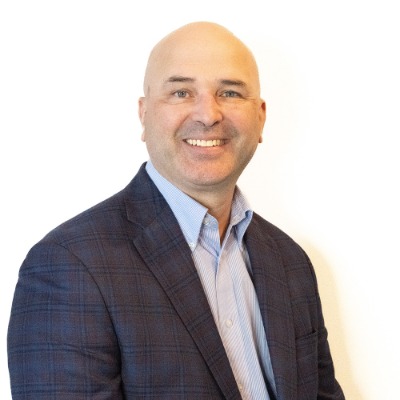
@jeff-wilson-6446
Educational Tax Credit Funding Expert. We know how to get the various educational tax credits like EFTC and EITC to work for students and schools
Active 3d ago
Joined Aug 19, 2025
Altoona, Pennsylvania
Powered by