Activity
Mon
Wed
Fri
Sun
Sep
Oct
Nov
Dec
Jan
Feb
Mar
Apr
May
Jun
Jul
Aug
What is this?
Less
More
Owned by John
The place to learn the real rules of money: liquidity, cash flow, and financial strategies the wealthy use to build lasting wealth. Take back control.
Smoke, Flow & Grow
317 members • Free
The Stogie Clubhouse
170 members • Free
Grow With Evelyn
3.8k members • $7/month
Time. Money. Freedom.
128 members • Free
Skoolers
161.9k members • Free
41 contributions to Wealth Without Wall Street

6d •
Why I would NEVER buy a brand-new car.
It’s not because I don’t like nice cars. It’s because I don’t like taking the biggest depreciation hit just so I can be the first person to sit in the driver’s seat. The moment you drive a new vehicle off the lot, it starts depreciating—and the first few years can be some of the most expensive years of ownership. So instead of buying brand new, consider buying a 2–4 year-old vehicle after someone else has absorbed a large portion of that early depreciation. Same luxury. Same badge. Same experience. But potentially tens of thousands of dollars less. And here’s the part people miss: It’s not just the money you save on the purchase. It’s what that money could be doing somewhere else. If you save $30,000 buying used and invest that capital instead, that money has the opportunity to compound for years. That’s called opportunity cost. Wealthy thinking isn't about never enjoying your money. It’s about understanding where you're willing to lose money—and where you're not. Let someone else pay for the new-car smell. I'll take the depreciated car and keep the capital. #WealthBuilding #CarBuying #Depreciation #OpportunityCost #FinancialFreedom
0
0

9d •
Before you make that extra mortgage payment, ask yourself one question:
How easy is it to get that money back? Send an extra $500 a monthto your mortgage and it becomes home equity. Want it back later? You may need to refinance or apply for a HELOC. That means going back to the bank, meeting its lending criteria, and qualifying based on things like your income, credit, debt and the value of your property. The bank can say no. Another strategy is to redirect that extra cash toward a properly structured participating whole life insurance policy. As cash value builds, you may be able to access capital through the policy’s contractual features or borrowing options without going through the same income and credit qualification process as a traditional HELOC or refinance. That can give you something mortgage equity doesn't always provide: ACCESS. CONTROL. LIQUIDITY. I'm not saying you should never pay down your mortgage. I'm saying you should understand the difference between building equity you may have to qualify to access and building a pool of capital designed to remain accessible while also providing permanent life insurance protection. The goal isn't simply to become mortgage-free as fast as possible. The goal is to build wealth you can actually control. Policy guarantees depend on the insurer, contract and premiums being paid as required; dividends and some policy values may not be guaranteed. Policy loans/withdrawals can reduce cash value and the death benefit and may have tax consequences. #WholeLifeInsurance #HomeEquity #MortgageStrategy #WealthBuilding #FinancialFreedom
0
0
10d •
Is it better to RENT where you sleep… or OWN?
We’ve been conditioned to believe that buying your home is always the smartest financial decision. But owning a home and building wealth are not necessarily the same thing. When you buy, you may tie up hundreds of thousands of dollars in a down payment, closing costs, mortgage payments, property taxes, maintenance and repairs. When you rent, you may be able to keep more of your capital liquid, accessible and working for you. The question isn’t simply: “Should I rent or buy?” The better question is: “Which option puts me in the strongest financial position?” If renting a $2 million home costs significantly less each month than owning it, and you can invest the difference into assets that produce income and compound over time, renting may actually be the wealthier decision. Your home is where you sleep. Your assets are what should help you build wealth. Sometimes owning makes sense. Sometimes renting makes sense. Run the numbers—not the emotions. Would you rather own the house or own the assets that could eventually pay for the house? #RentVsBuy #RealEstate #WealthBuilding #FinancialFreedom #HomeOwnership
0
0

11d •
Paying off your mortgage early is like rushing to whooping…
My first book Wealth Without Wall Street, Taking Back Control of Your Money in a Rigged Financial System was released May 2024. It teaches you how to play the game of money that banks don't want you to learn. I was a Bay St advisor for 17 years and I left that world because I realized that while I was there to help my clients create wealth, I was making the bank wealthier and also myself. In 2016, I sold my book of business and decided to become an educator in the financial space and teach people the rules of money. You can find Wealth Without Wall Street on Amazon or in your local book store. #financialfreedom #wealth #wealthwithoutwallstreet #financialeducation #money You just don’t do that. 😂 Yet millions of people are in a race to send every extra dollar they have to the bank just so they can say: “I’m mortgage-free.” But here’s the question nobody asks: What did you give up to get there? You traded liquid cash for trapped equity. Your home equity doesn’t produce income. It doesn’t compound. And when you need that money back, you may have to ask the bank for permission to access it. The goal shouldn’t simply be to pay off your mortgage faster. The goal should be to build enough liquidity, cash flow, and wealth that you could pay it off whenever you want. That’s a very different financial position. Stop racing to pay the bank. Start racing to build your wealth. #Mortgage #HomeEquity #WealthBuilding #FinancialFreedom #PersonalFinance
0
0

20d •
Your RRSP'S & 401K Might Be in Trouble
Your RRSP isn't a tax break. It's a tax bill you haven't opened yet. Read that again. A deduction is not savings. A deduction is a delay. You didn't avoid the tax. You made a deal with a government that gets to set the rate later — and never told you what it would be. Here's what nobody says out loud: → You deferred tax on a $50K contribution. → It grows to $400K. → Now the tax bill is on $400K. At whatever rate exists then. Not now. You cut the tax on the seed. You handed them the harvest. And you don't even control the timing. At 71 that RRSP becomes a RRIF and the withdrawals become mandatory. In the U.S., RMDs kick in at 73. The government decides when you take income — and that income can drag your OAS right out of your hands. Deficits are at record highs. Boomers are retiring in waves. Ask yourself honestly: does that look like a country lowering tax rates? You were sold "tax savings." You bought "tax uncertainty." Liquidity. Control. Certainty. Pick a strategy that gives you all three. Drop "BOMB" in the comments and I'll send you the breakdown. — #RRSP #401k #TaxStrategy #RetirementPlanning #FinancialLiteracy WealthWithoutWallStreet
0
0

1-10 of 41
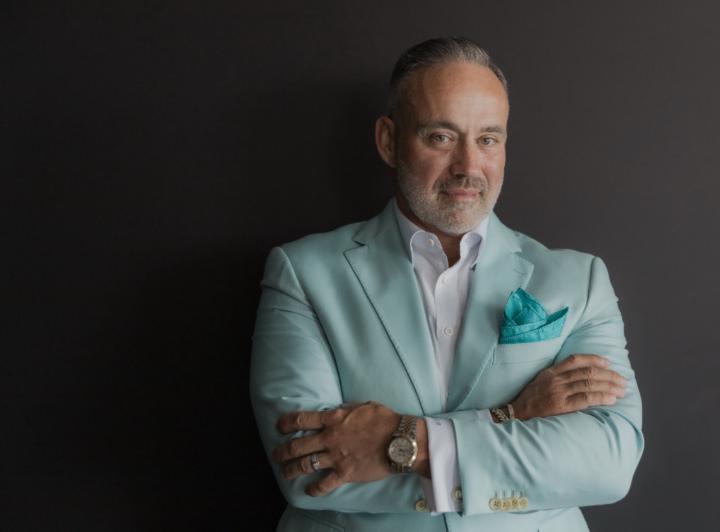
@john-mcguire-2032
For the past 27 years, I’ve helped individuals, families, and business owners rethink how money actually works.
Active 6d ago
Joined Mar 15, 2026
Toronto, CA
Powered by