Activity
Mon
Wed
Fri
Sun
Sep
Oct
Nov
Dec
Jan
Feb
Mar
Apr
May
Jun
Jul
Aug
What is this?
Less
More
Owned by Josh
I help people get sober. Recovery is the foundation. Resilience is the goal. Sobriety, fitness, service, community, and purpose. Win the next 24.
Skoolers
161.9k members • Free
70 contributions to Resilient Daily

4d •
Want Less
“He who is rich wants little.” — Epicurus We’re taught to think of wealth as having more. More money. More comfort. More recognition. More certainty. More of whatever we believe will finally make us feel complete. But there’s another kind of wealth: Needing less. The Stoics understood that if your peace depends on circumstances satisfying you, then your peace belongs to those circumstances. If you need everything to go your way, people to behave as you wish, and discomfort to disappear before you can be okay, you’ll always be vulnerable to what happens next. There will always be another thing to chase. Recovery can reveal the same truth. For many of us, life once revolved around more—more relief, more escape, more control, more of something outside ourselves to change what was happening inside. A resilient life is built differently. You begin to discover that enough can actually be enough. A clear mind. Useful work. People you care about. A few principles worth living by. The ability to meet today without needing to escape it. Contentment isn’t the absence of ambition. You can still build, improve, pursue, compete, and achieve. The difference is that you no longer make your peace dependent on getting the next thing. You can want something without needing it to be okay. Maybe real wealth has less to do with how much you possess and more to do with how little you require in order to live well. Daily Practice: Listen for yourself saying: I’ll be okay when… When I get the promotion. When this problem goes away. When they finally understand me. When I have more. Then ask yourself: What if what I have today is already enough to live well today? Keep working toward what matters. Just don’t postpone your peace until you get there. The richest life may not be the one that has the most, but the one that needs the least. #ResilientDaily #Stoicism #DailyStoic #Resilience #RecoveryMindset

0 likes • 1d
@Brant Proctor I totally get that. I think it’s even more heightened in my life now that I’ve given up booze.
5d •
Face Forward
“As they say, the moment we turn and look behind us, death stands right there.” — Seneca There is value in looking back. We look back to learn. To take responsibility. To recognize patterns. To make amends where we can. To remember what certain choices cost us. But there is a difference between examining the past and living in it. Seneca’s reminder is uncomfortable because it is true: everything behind us is already gone. The conversation cannot be unsaid. The mistake cannot be unmade. The years cannot be reclaimed. Yesterday will not negotiate with us. And yet we can spend enormous amounts of today trying to rewrite it. Regret tells us to replay the mistake. Resentment tells us to rehearse the injury. Nostalgia tells us things were better before. Shame tells us that who we were is still who we are. Recovery teaches us something different. We can acknowledge where we have been without returning there. The past can become instruction instead of identity. We can make amends when possible, learn the lesson, and then turn our attention toward the only place where change can actually happen: Today. Stoicism calls us back to the same truth. Our responsibility is not to yesterday. It is to the character we bring to this moment. Life is moving in one direction. So should we. Daily Practice: When you catch yourself replaying something from the past today, ask: Is there something here I still need to do—or am I simply revisiting something I cannot change? If action is required, take it. If the lesson has already been learned, carry the wisdom forward and leave the rest behind. Look back for the lesson. Then turn around and live.
0
0

6d •
Lead Yourself First
“In training the excellence of another, a man must necessarily train his own.” — Seneca There is something demanding about helping another person grow. You cannot teach patience without practicing patience. You cannot encourage discipline while continually abandoning your own. You cannot ask someone to face difficulty with courage while running from every uncomfortable moment in your own life. Seneca understood that developing another person inevitably exposes the condition of our own character. The teacher is being trained too. The leader who asks for accountability must become more accountable. The parent teaching restraint must practice restraint. The friend offering perspective must examine his own thinking. And the person in recovery who reaches back to help someone else is reminded of the principles that helped him move forward. Service has a way of sharpening us. Not because we need to become perfect before we can help anyone, but because helping another person gives us another reason to live what we say we believe. That is one of the quiet gifts of being useful. We begin by trying to strengthen someone else and discover that the work is strengthening us too. Resilience grows the same way. We pass along what has helped us. We encourage someone who is struggling. We model steadiness when things become difficult. And each time we do, the principles become a little more deeply rooted in our own lives. The lesson is simple: Don’t just tell people what strength looks like. Practice it beside them. Daily Practice: Think of someone you are trying to encourage, lead, teach, sponsor, mentor, or simply support. Ask yourself: Am I practicing what I’m encouraging in them? Then choose one quality you hope to strengthen in that person and practice it yourself today. Sometimes the person we are helping to become better is quietly helping us become better too.
0
0

7d •
Meet the Moment
SEE CLEARLY. ACT WELL. ACCEPT. “Objective judgment, now, at this very moment. Unselfish action, now, at this very moment. Willing acceptance—now, at this very moment—of all external events. That’s all you need.” — Marcus Aurelius Most of life gets complicated because we make it complicated. We replay what happened. We predict what might happen. We question motives, resist reality, and carry emotions from one moment into the next. Marcus Aurelius offers a simpler path. See clearly. Act well. Accept what is. Objective judgment means refusing to let fear, anger, resentment, or ego distort the facts. Unselfish action means choosing what is right, not merely what is comfortable. Willing acceptance means letting reality be reality without wasting energy fighting what has already arrived. That doesn’t mean becoming passive. It means becoming effective. In recovery, resilience, and everyday life, we often lose our footing when we try to solve everything at once. We want certainty about tomorrow. We want relief from discomfort. We want people and circumstances to behave differently. But none of that is required for us to live well right now. This moment only asks three things of us: See the situation honestly. Do the next right thing. Accept the rest. That really may be enough. Daily Practice: When your mind starts racing today, bring yourself back to three questions: What is actually true? What is the right action? What do I need to accept? Then stop negotiating with the moment. See clearly. Act well. Accept.
1
0

9d •
Under Pressure
“Stress is essential to leadership. Living with stress, knowing how to handle pressure, is necessary for survival. It is related to man’s ability to wrest control of his own destiny from the circumstances that surround him.” — Admiral James Stockdale We often imagine resilience as the ability to remove stress from our lives. But a resilient life is not a stress-free life. Pressure is part of the deal. Responsibility brings pressure. Growth brings pressure. Sobriety brings moments of pressure. Leadership—whether of a team, a family, or simply ourselves—requires us to remain steady when circumstances are anything but. The question is not whether stress will come. It is what we become when it does. We can allow circumstances to dictate our behavior, or we can practice governing ourselves within those circumstances. That is where our freedom lives. We may not control the workload, the difficult conversation, the unexpected setback, or the emotions that rise within us. But we still control the next decision. We control whether we react impulsively or respond deliberately. We control whether pressure drives us back toward old escapes or deeper into the principles we have chosen to live by. Stress can reveal where our foundation is weak. It can also strengthen it. The goal is not to become numb to pressure. It is to become someone who can feel it without being ruled by it. Daily Practice: When pressure builds today, resist the urge to immediately escape it. Ask: What does this moment actually require of me? Not tomorrow. Not everything at once. Just this moment. Stand where you are. Control what is yours. Make the next sound decision. You don’t become resilient by avoiding pressure. You become resilient by learning how to stand inside it.
1
0

1-10 of 70
@josh-wheeler-7984
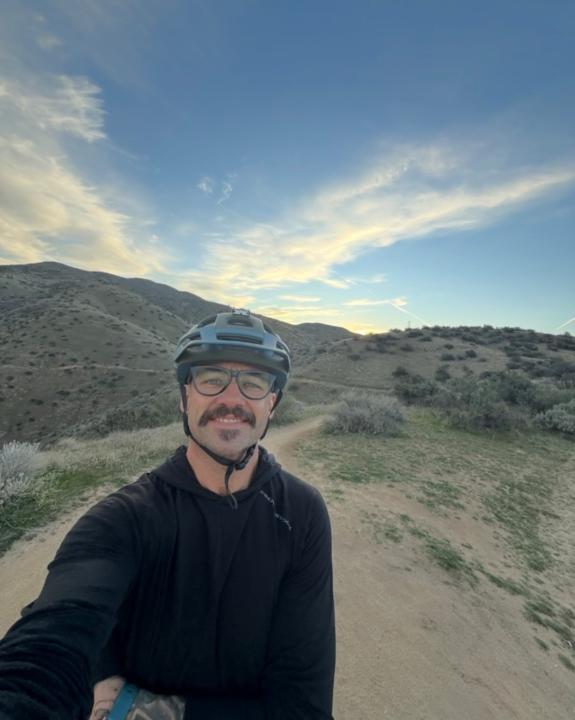
Sober. Firefighter. Entrepreneur. Seeking daily discomfort, obsessed with fitness and family. Building strength in every area of life.
Active 1d ago
Joined Jun 20, 2026
Powered by