Activity
Mon
Wed
Fri
Sun
Nov
Dec
Jan
Feb
Mar
Apr
May
Jun
Jul
Aug
Sep
Oct
What is this?
Less
More
Mob Talk Social Club
273
Free
Franzese Family
746
5.0
$25/m
155 contributions to Mob Talk Social Club
🔥
16h •
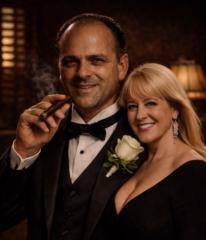
Welcome John Mancinelli
Welcome @John Mancinelli John is the owner of https://agrcigars.com/ Some of our members have purchased from him. @Jimmy Taylor , @Steven Dunham These are excellent cigars that are now among my favorite John is busy doing events and promoting his business. If you're a cigar guy (or gal), I encourage you to try them If you're not sure, reach out to John on his Facebook page https://www.facebook.com/profile.php?id=61574972142573 and he'll send you a free sample, just for trying him out https://agrcigars.com/ https://www.facebook.com/profile.php?id=61574972142573

2 likes • 14h
Welcome John
🔥
3d •
Corlone rap
https://www.instagram.com/reel/DeazlMUspuQ/?obrf=MWs2NnNtd2J0ZjUxZw== Yes Vito Corlone and his family have a new rap video. Let's celebrate the great Corlone family rap party.

6 likes • 3d
🤣😂
🔥
3d •
Michael Franzese displays the wine 🍷 edict
https://www.facebook.com/share/r/19gpfXpBnU/ Michael Franzese displays how the mob would secretly display who was not to be trusted at the dinner table. Just by the way you pour the vino. Subtle hints make all of the difference.

4 likes • 3d
Interesting now I will be watching him on the Cruise LOL..
🔥
3d •
Raymond L. S. Patriarca: The Providence Boss With Power in Boston
Boston’s organized-crime history does not stop at the Massachusetts border. For decades, an important center of power was in Providence, Rhode Island. Raymond L. S. Patriarca led the New England Mafia, an organization with cooperating Providence and Boston factions. Unlike the Winter Hill Gang, this was La Cosa Nostra—the Italian-American Mafia. Patriarca operated from a vending-machine business in Providence’s Federal Hill neighborhood, while underboss Gennaro “Jerry” Angiulo oversaw Boston operations. His influence made him a major investigative target, but gathering information and proving a criminal case were different challenges. In 1968, a federal jury convicted Patriarca in a case involving an interstate conspiracy to commit murder in furtherance of an unlawful gambling enterprise. The prosecution’s principal witness was Joseph Barboza, identified in the appellate opinion as Baron. Patriarca received a five-year federal prison sentence. The First Circuit affirmed the convictions on October 14, 1968. There is another important chapter: between March 1962 and July 1965, the FBI secretly monitored conversations in Patriarca’s business office. A later federal appeals opinion states that this surveillance violated the Fourth Amendment. Litigation over access to the resulting records became a significant dispute about government transparency and privacy. Patriarca died on July 11, 1984. His career connects Boston’s criminal history to a wider New England network—and reminds us why historical reporting must distinguish convictions, investigative allegations, and unlawful government conduct. A statement in an FBI memo is not automatically a proven fact. Discussion question: Did you know Boston and Providence had cooperating factions within the same Mafia organization?

6 likes • 3d
Great find and share..

🔥
3d •
Real Mob Stories James Proctor - Was Dominick Cicale Really Made? The Basciano Transcripts Don't Lie
Was Dominick Cicale Really Made? The Basciano Transcripts Don't Lie Tommy Karate Pitera says Dominick Cicale was never made. Dom Cicale is naming living men and alleged murders on a livestream. This episode goes to the documents on both claims and shows you exactly where to check every one of them yourself. On September 16, Ericka Pitera posted a new recording from her father in which Tommy says Cicale has 20 302s on him, then argues Cicale could never have been inducted because he never met boss Joe Massino. James Proctor takes that apart with the record. Joseph Massino, testifying under oath for the government at the 2011 Vincent Basciano trial, identifies Dominick Cicale as a captain in the Bonanno family. Defense counsel got the same confirmation on cross examination. Cicale himself testified under penalty of perjury that he took the induction oath. The Justice Department listed him as a Bonanno captain in the Salvatore Vitale sentencing submission. Then comes the harder history lesson. Why was Cicale made and handed a crew so fast? Massino's eight year on record requirement and the Commission's five year drug case waiting period existed to keep exactly that profile out. Then Massino was arrested, underboss Vitale flipped, the captain class went down in waves, and Basciano needed bodies in leadership chairs. Tommy's instinct about the process is defensible. His conclusion about the outcome is not. On the 302 question the record runs the other way. Pitera rejected the government's cooperation demands, went to trial in a capital case, was convicted in June 1992 on the testimony of his own crew member Frank Gangi, took a life sentence, and was still litigating actual innocence in the Second Circuit n 2012. No proffer. No cooperation agreement. No sentence reduction. No located 302. James also addresses what nobody in this genre wants to say out loud. A cooperating witness who already testified four times is now attaching alleged crimes to living names on an open livestream. This episode states plainly that unconvicted men get the presumption of innocence, and gives an honest read on where escalation like that ends. No sides. No spin. Documents first and drama second. Go pull the transcripts and check the work.
7 likes • 3d
I thought so..
1-10 of 155
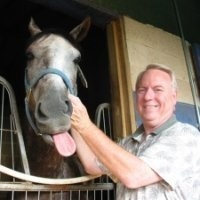
@paul-schmidt-1288
Retired Insurance Agent after 42 years.Now own a successful travel agency. Have traveled the world, that and horseracing are my passion .
Active 4h ago
Joined Sep 17, 2026
Bluffton, SC
Powered by