Activity
Mon
Wed
Fri
Sun
Nov
Dec
Jan
Feb
Mar
Apr
May
Jun
Jul
Aug
Sep
Oct
What is this?
Less
More
Future Producer Society
91
Free
56 contributions to Future Producer Society
15h •
Under The Weather - Thanks For Checking In!
Peace everyone, It's been a grueling few days as everyone in my house, has become ill. I'd like to thank everyone for their patience, as being on the computer/livestream, etc., has ben difficult. Lastly, thanks to all of you who checked in on me -I truly appreciate it. I hope to be back up and guns blazing in another day or so!
0 likes • 14h
Man. Blessing for quick and healthy recovery brother. 🙏🏾
6d •
Stop Listening to Music Like a Fan 🎧
One of the easiest ways to become a better producer doesn’t require another plugin, piece of gear, or course. Learn how to listen differently. Pick a record you love and listen to it several times. But instead of listening to the whole song, focus on one thing at a time. 🥁 Listen #1 — Drums Where does the kick hit? What is the snare doing? When do the drums change or disappear? 🎸 Listen #2 — Bass Is it following the kick? Following the chords? How much space does it leave? 🎹 Listen #3 — Music What are the chords and melodies doing? How many musical elements are actually playing at once? 🎼 Listen #4 — Arrangement When do instruments enter and leave? How long are the sections? What changes when the hook comes in? 🎚️ Listen #5 — The Details Now listen for everything you normally don’t notice—drops, filters, panning, automation, transitions, ad-libs, reverb, little sounds tucked into the background. You’ll probably hear things on the fifth listen that you never noticed after hearing the record 100 times. That’s because there’s a difference between hearing music and studying music. Once you start listening for the decisions behind the record, your favorite songs become some of the best production lessons you can get. The records you already love can become your textbooks. Try it with one song this week. What record would you choose to dissect? 👇
3
0

8d •
Sharing What I’ve Learned 🎓
One thing I’ve realized on this producer journey is that whenever I figure out a workflow or solve a problem that made my own process easier, there’s probably another producer out there trying to figure out the exact same thing. So instead of keeping it to myself, I’ve been trying to document more of what I learn and share it. This tutorial walks through how I turn a simple 4-bar loop into a full song on MPC 3 — building an 8-bar hook, creating different verse sections, adding an intro and outro, and then putting everything together in Song Mode. Hopefully it saves somebody else some of the trial and error I went through figuring it out. If you’re working with the MPC and you’ve been getting stuck making loops instead of full arrangements, check it out. And if you already have your own way of doing it, drop your method in the comments too. I’m always interested in seeing how other producers approach the same problem. https://youtu.be/W1jNSxHBFMo
1 like • 7d
@Richard Harmon I know there is a newbie out there somewhere like I was that could use the step by step. Appreciate the love sir!
1 like • 8d
Welcome!!😁
23d •
Has Drake Outgrown Hip-Hop… or Left It Behind?
I watched Drake's FOMO film, and I'm probably about to make myself the villain with this one. 😂 As a Gen Xer who grew up with hip-hop, I've always viewed hip-hop as more than a genre of music. It's a culture. It came from struggle. Reinvention. Making something out of nothing. And even as artists became successful, there was something powerful about remaining connected to the culture that created them. Watching FOMO, I found myself wondering whether Drake has crossed into something different. And I'm not saying an artist can't evolve. They absolutely should. I'm also not saying a rapper can't make country, R&B, pop, dancehall, house, or whatever else inspires them. Hip-hop itself has always borrowed, sampled, mixed, and reinvented. But there has to be a point where being influenced by other cultures and genres becomes something else entirely. Drake has reached a level of wealth and creative freedom where he can essentially make whatever he wants—and FOMO feels like exactly that. Hip-hop, R&B, country influences, goth aesthetics, luxury, pop culture...everything thrown into one world. And maybe that's the point. But it left me asking something bigger: At what point does an artist stop being a hip-hop artist who experiments with other genres and simply become a pop artist who also makes hip-hop? And here's the part that's probably going to get me in trouble: Should we even care? Part of me thinks we should. Because if hip-hop is a culture and not simply a musical genre, then I think there's value in preserving what makes that culture distinct—especially as it becomes increasingly global, commercialized, and blended into everything else. Maybe Drake represents hip-hop becoming bigger than its original boundaries. Or maybe he represents what happens when an artist becomes so big that the culture he came from is no longer big enough to contain him. So I'll leave y'all with two questions: Where's the line between evolution and losing connection to the culture? And maybe the bigger question...
3
0
1-10 of 56
@rick-chestnutt-1760
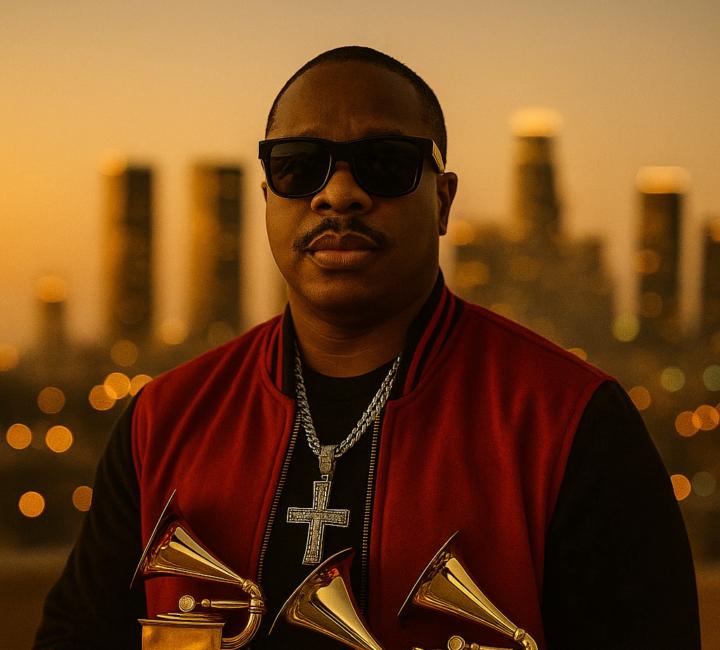
Rodrick “BigRiz” Chestnutt is a producer and AI Artist Architect blending R&B, Hip-Hop, and Street Soul with cinematic storytelling.
Active 14h ago
Joined Jan 19, 2026
Georgia
Powered by