Activity
Mon
Wed
Fri
Sun
Nov
Dec
Jan
Feb
Mar
Apr
May
Jun
Jul
Aug
Sep
Oct
What is this?
Less
More
Owned by Sidney
For nonprofit leaders done confusing tax status with a business model. Free community. Real business frameworks.
Skoolers
152.8k
Free
Content Mastery Inner Circle
179
Free
14 contributions to The Nonprofit Business Lab

Sep 3 •
Top 10 Limiting Beliefs in America
This was shared with me recently and it resonated so loudly as I think about the nonprofit sector as a whole, our organizational leadership, and our consistent struggles. Now I know, limiting beliefs can sound kind of "woo-woo" for those of us that are pragmatists and realists. Nevertheless, I have come around to understanding how all challenges, and in turn the solutions to said challenges, start in the mind. So check out the Top 10 and let me know what you think: 1. Fear of Greatness 2. Fear of Not Being Good Enough 3. Fear of Not Being Loved 4. Fear of Rejection 5. Fear of Failure 6. Fear of Success (very similar to #1 but with some nuance) 7. I Don't Deserve/ I Am Not Worthy 8. Rich People Are... (insert negative beliefs) 9. Deep-rooted self-beliefs (oftentimes taught to us during our formative years) 10. I Have to Work Long and Hard for My Money Do any of these resonate? As I think about the nonprofit sector specifically, #2, #4, #8 and #9 stand out to me.
0
0
Aug 14 •
Why are nonprofits so good at programming?
This was a question I posed to a group during a recent presentation about nonprofit sustainability. I heard the responses you would expect to hear: 1) because the programming is how the mission gets fulfilled. 2) because that is what people are most passionate about. 3) because it is the work that gets done on a regular basis. While all of the above are correct, one response was glaringly missing from the 12-15 in attendance... Nonprofits tend to be really skilled at programming because grant funders require it. We know most grants fund programming, and where money flows, so does attention, focus and execution. As a sector, we didn't accidentally become good at programming. Our revenue model trained us to become good at it. It makes me wonder, what might happen if we brought that same urgency, discipline and attention to building earned revenue? I believe it is likely that we would become really skilled at that too, over time. 🤔
0 likes • Sep 2
@Grace Chavonne I do believe we are beginning to see this but it is a slow adoption and not quite consistent in formalizing that form of financial support yet. What I have found: Philanthropy is wrestling with the largest cutback of federal funding to the nonprofit sector, maybe in history. They know that philanthropy can't possibly fill that void and thus the timing for these conversations around long-term sustainability and earned revenue are timely. The conversations can happen in any number of ways, but I have seen conversations with Program Managers at the various large foundations and appeals to any existing major donors in this realm are received well. There is a principle called the "fire bullets, then cannonballs" by Jim Collins that works wonders here. The premise is using small experiments, relatively low-risk in resource allocation and reputation, to achieve a proof of concept. Those small experiments simply seek to answer, "can this venture work?" Once there is a bit of social proof, you take that to your philanthropists, major donors, etc. to say, "hey, we have tried this, using our own resources, we have a bit of success and would like you to support an expansion of this work." The goal is always to be self-sufficient and donors/funders like that and will support it.
Aug 21 •
Welcome to Our Latest Members... Garrett, Corey & Eliza
I wanted to extend a special welcome to our newest members this week: @Garrett Webster, Sr. with Youth Guidance - Kansas City. Long time friend, colleague, former neighbor and exceptional Executive Director leading nationwide programs such as BAM (Becoming a Man) and WOW (Working on Womanhood). @Corey Starks with CompliCore Consulting Solutions. Long time friend, former roommate, foster parent, AI expert, and compliance consultant for healthcare organizations throughout Arizona and nationwide. @Eliza Barr with Reaching Out from Within. Nonprofit colleague, reentry expert, and an exceptional Executive Director who oversees programs that represent all 15 adult correctional facilities in Kansas, 7 in North Carolina and the Transition Center in Kansas City, MO. Thank you to each of you for accepting the invitation to be founding members of this online community of nonprofit and community leaders, consultants and individuals committed to building the strongest businesses possible so the important community work and programming can continue.

Aug 14 •
New Nonprofit Leader — I Have 3 Questions
I’m currently building Jucoban Community Recovery Foundation, Inc. and making sure we establish the right financial and compliance foundation from the beginning. I would love some insight from those who have already gone through this process. 1. 501(c)(3) Application Fee: Is the IRS filing fee paid at the time the application is submitted, or is there ever an option to be invoiced or pay later? 2. Best Bank for a Growing Nonprofit: What bank or credit union would you recommend for a nonprofit that plans to accept grants and donations and eventually wants access to business credit or lending? I’m especially interested in low fees, good nonprofit banking features, ACH capabilities, and a bank that can grow with an organization planning to operate nationwide. 3. The “Nobody Told Me” Filing: For experienced nonprofit leaders, what is one form, registration, report, compliance requirement, or filing that new nonprofit founders commonly overlook but should know about early? I’m trying to follow one rule as we build: stay ready so we don’t have to get ready. I would rather establish the right systems now than discover something important after a funding opportunity comes along. Thank you for any experience or recommendations you can share!
1 like • Aug 18
Hey @Neisyy Whetstone , apologies for the delayed response. I can't speak for others obviously but this is what I've observed in aiding a recent nonprofit through their 1023EZ process within the last 12 months. 1. The application is paid at the time of application in full. 2. So, a banking relationship is very personal. You may find that your existing personal banking relationship(s) provide a great on-ramp for your business needs, including establishing a tax-exempt entity. But I encourage every nonprofit to pay attention to the most active banks and credit unions in their area when it comes to sponsorships at charity events, etc. The intentionality matters. So although I have a great personal banking relationship with a national brand, I never recommend them but instead a couple of local credit unions, and for a very special subset of nonprofits that focus on housing, a specific, local bank who focuses exclusively on housing readiness programs for first time homebuyers. Long story short, ask around your area to other nonprofits, they won't steer you wrong. 3. And I don't have a filing per se, but don't forget to maintain a status of "good standing" with your Secretary of State. Here in Missouri, it's just your annual filings with the State of Missouri. Nothing hard, but many funders won't fund a nonprofit who is not in good standing with the state, so there's that. And the real "nobody told me" epiphany that many new founders don't realize is that most new nonprofits DO NOT receive grant funding of any significance for YEARS. It's the sad truth that many don't expect. So, focus on sound business practices early, tight expense control, and focus on relationships. Relationships will lead to funding. Both individual donors and organizational donors. Foundations or corporations don't fund, people who work in foundations and corporations fund, so always focus on authentic, genuine relationships.
Aug 3 •
Hello everyone!
My name is Neisyy, and I’m honored to be here. We joined this community because we want to learn from experienced nonprofit leaders and better understand what it takes to build and sustain an organization that serves communities nationwide. We believe there’s always something new to learn, and we’re excited to connect, share ideas, and grow alongside others who are making a difference. @Sidney Smith, thank you for creating a space where nonprofit leaders can learn, collaborate, and support one another. Consistency truly is the key to building lasting impact. I currently serve as the Chair of the Board, President & Chief Executive Officer of Jucoban Community Recovery Foundation, Inc. We are an Arizona nonprofit dedicated to helping individuals and families achieve stability through housing, recovery support, community resource navigation, veterans assistance, returning citizen support, homelessness prevention, and partnerships with licensed service providers. We’re looking forward to learning from this community, building meaningful relationships, and applying what we learn to strengthen our organization and expand our impact.
1 like • Aug 5
Welcome Neisyy! We have nonprofit professionals from all over the country but you may be the first from Arizona. If you would indulge us, can you delve into some of the things that are going well and some things that give you concern as Board Chair and CEO?
1-10 of 14
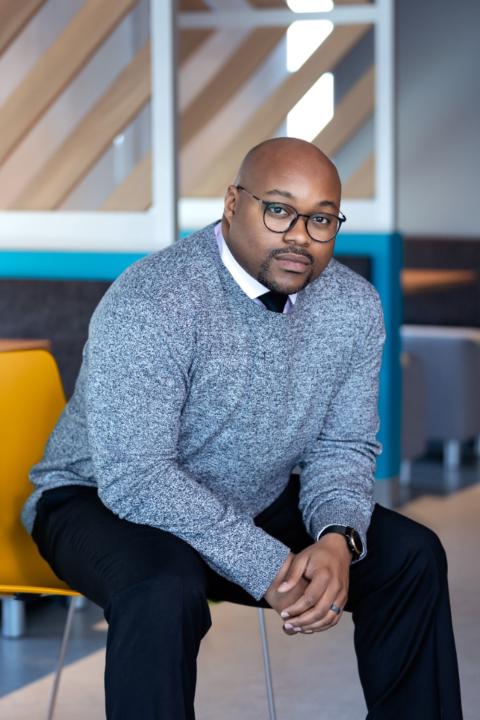
@sidney-smith-8725
Sidney is a recent entrepreneur and Founder of The Nonprofit Guild, where he coaches nonprofit leaders in making more money for their organizations.
Active 4h ago
Joined Feb 9, 2026
Kansas City, MO
Powered by