Activity
Mon
Wed
Fri
Sun
Nov
Dec
Jan
Feb
Mar
Apr
May
Jun
Jul
Aug
Sep
Oct
What is this?
Less
More
Owned by Tracey
Gardening in cold climates — growing food indoors and out, year-round. Real solutions that work.
Simple step-by-step video lessons to grow fresh lettuce, herbs and more indoors — from seed to harvest. No garden, soil or experience needed.
Community Business (english)
54
5.0
$100,000/m
Rebound Nation
419
Free
Freedom Creator Club
711
5.0
$99/m
Living Soil Community
1.4k
Free
Journey on Nature's Path
527
Free
Grow Food Anywhere
170
Free
Oasis Builders
164
Free
DIY Gardening
1.2k
Free
15 contributions to The Potted Garden Society

Jan 11 •
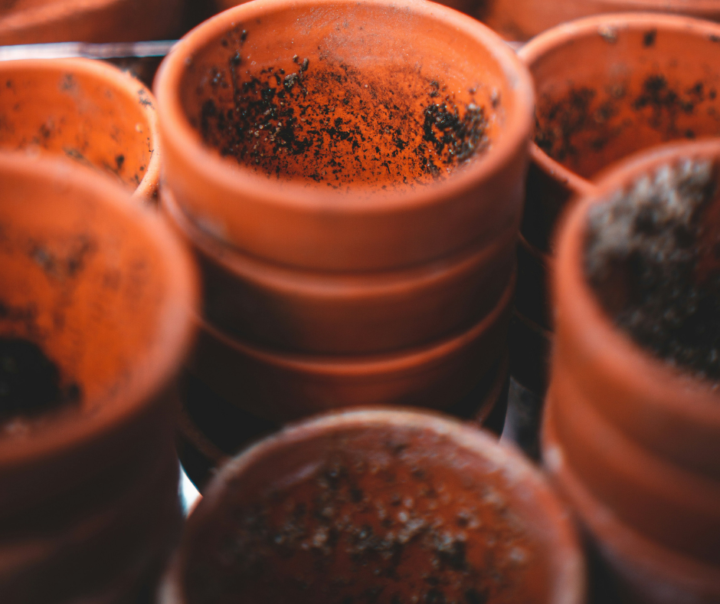
How to Sanitize Pots and Trays the Easy Way (A Quick Reset That Prevents Big Problems)
If you’ve ever had fungus gnats, mystery mold, damping-off, or seedlings that suddenly flop over for no good reason… there’s a good chance your pots and trays had a little “leftover history” on them. The good news: you don’t need fancy products or a full afternoon of scrubbing to reset your containers. You just need a simple routine that’s easy enough to actually do. Especially in January when we’re prepping for seed starting season. Below is a beginner-friendly method that works for pots, seed trays, cell inserts, humidity domes, and saucers. 𝐖𝐡𝐲 S𝐚𝐧𝐢𝐭𝐢𝐳𝐢𝐧𝐠 M𝐚𝐭𝐭𝐞𝐫𝐬 (𝐢𝐧 𝐩𝐥𝐚𝐢𝐧 𝐄𝐧𝐠𝐥𝐢𝐬𝐡) Old pots and trays can carry: * fungus and mold spores * algae film * fertilizer salts (that crusty white stuff) * pest eggs/larvae hiding in creases * disease organisms from last season’s plants Sanitizing helps reduce problems before they start. Especially for seed starting, where young plants are extra sensitive. 𝐖𝐡𝐚𝐭 𝐘𝐨𝐮’𝐥𝐥 𝐍𝐞𝐞𝐝 (𝐤𝐞𝐞𝐩 𝐢𝐭 𝐬𝐢𝐦𝐩𝐥𝐞) Pick what you already have: * Dish soap + warm water * A scrub brush or old sponge * A tub/sink/bucket * One sanitizer option (choose ONE): * 𝐁𝐥𝐞𝐚𝐜𝐡 (fast + very effective) * 𝐇𝐲𝐝𝐫𝐨𝐠𝐞𝐧 𝐩𝐞𝐫𝐨𝐱𝐢𝐝𝐞 (easy, less stinky) * 𝐖𝐡𝐢𝐭𝐞 𝐯𝐢𝐧𝐞𝐠𝐚𝐫 (fine for mineral buildup, lighter-duty for sanitizing) * 𝐓𝐡𝐞 “𝐄𝐚𝐬𝐲 𝐖𝐚𝐲” 𝐌𝐞𝐭𝐡𝐨𝐝 (𝐂𝐥𝐞𝐚𝐧 → 𝐒𝐨𝐚𝐤 → 𝐃𝐫𝐲) 𝐒𝐭𝐞𝐩 𝟏: 𝐒𝐡𝐚𝐤𝐞, 𝐝𝐮𝐦𝐩, 𝐚𝐧𝐝 𝐫𝐢𝐧𝐬𝐞 (𝟐 𝐦𝐢𝐧𝐮𝐭𝐞𝐬) * Dump old soil and roots * Knock off loose debris * Rinse pots/trays with water 𝐓𝐢𝐩: If it’s caked-on, let it soak in plain water for 10 minutes first. 𝐒𝐭𝐞𝐩 𝟐: 𝐖𝐚𝐬𝐡 𝐰𝐢𝐭𝐡 𝐬𝐨𝐚𝐩𝐲 𝐰𝐚𝐭𝐞𝐫 (𝐭𝐡𝐞 𝐩𝐚𝐫𝐭 𝐭𝐡𝐚𝐭 𝐚𝐜𝐭𝐮𝐚𝐥𝐥𝐲 𝐦𝐚𝐭𝐭𝐞𝐫𝐬) Sanitizers don’t work well through dirt. So do a quick scrub first: * Add a few drops of dish soap to warm water * Scrub the inside, bottom, and drainage holes * Rinse This step alone fixes a surprising number of issues. 𝐒𝐭𝐞𝐩 𝟑: 𝐂𝐡𝐨𝐨𝐬𝐞 𝐲𝐨𝐮𝐫 𝐬𝐚𝐧𝐢𝐭𝐢𝐳𝐞𝐫 𝐬𝐨𝐚𝐤 (𝐩𝐢𝐜𝐤 𝐨𝐧𝐞) 𝐎𝐩𝐭𝐢𝐨𝐧 𝐀: 𝐁𝐥𝐞𝐚𝐜𝐡 𝐬𝐨𝐚𝐤 (𝐛𝐞𝐬𝐭 𝐟𝐨𝐫 “𝐈 𝐰𝐚𝐧𝐭 𝐢𝐭 𝐭𝐫𝐮𝐥𝐲 𝐜𝐥𝐞𝐚𝐧”) * Mix 1 part bleach to 9 parts water (a 10% solution) * Soak pots/trays 10 minutes * Rinse well * Air dry completely 𝐁𝐞𝐬𝐭 𝐟𝐨𝐫: seed trays, domes, anything that previously had disease, or if you’ve had damping-off.

3 likes • Jan 11
Mine are getting the "deep freeze" sanitizing out in my garden shed right now. That should kill off everything! ❄️🌱

Dec '25 •
Question -Looking For Advice!
This was my 1st year gardening and I was figuring out how put the garden beds - to bed lol. Also new homeowner so was looking for best cost effective way to mulch the veggie garden beds. My mom asked her landscaper to not throw out the leaves this year so i could use them but when I opened the bag there's a lot of straw/hay? So it's not from her yard I ended up just using it anyway but now I'm nervous did this other persons yard have poison ivy? Pesticide treatments ? Or maybe it might be fake hay for fall decor? Could use some advice Should I just leave it alone or?
2 likes • Dec '25
If it’s just a cover for the winter and it freezes it should be ok to leave until spring and then remove. You could maybe check with landscaper on what was collected in the bags.
Oct '25 •
🥔 National Mashed Potato Day: Grow Your Own Spuds in Containers
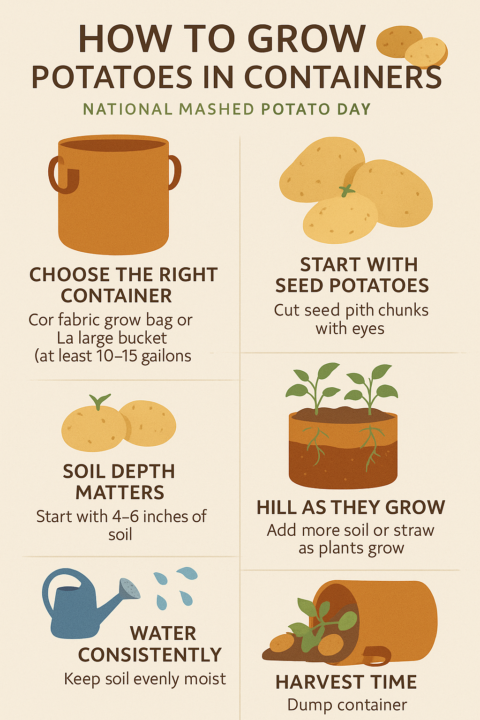
October 18 is National Mashed Potato Day — and what better way to celebrate than by dreaming of fluffy, buttery mashed potatoes made from your very own harvest? The good news: you don’t need a farm field to grow potatoes. With just a container and a little know-how, you can raise a crop of spuds right on your patio, balcony, or deck. 🌱 𝐖𝐡𝐲 𝐆𝐫𝐨𝐰 𝐏𝐨𝐭𝐚𝐭𝐨𝐞𝐬 𝐢𝐧 𝐂𝐨𝐧𝐭𝐚𝐢𝐧𝐞𝐫𝐬? * 𝐒𝐩𝐚𝐜𝐞 𝐒𝐚𝐯𝐞𝐫: Containers let you grow potatoes even in small spaces. * 𝐄𝐚𝐬𝐲 𝐇𝐚𝐫𝐯𝐞𝐬𝐭: Just tip over the pot or dig through the soil for your fresh spuds. * 𝐅𝐞𝐰𝐞𝐫 𝐏𝐞𝐬𝐭𝐬: Container growing helps reduce problems like wireworms and soil-borne diseases. * 𝐅𝐮𝐧 𝐟𝐨𝐫 𝐅𝐚𝐦𝐢𝐥𝐢𝐞𝐬: Kids love the “treasure hunt” of digging up potatoes! 🪴 𝐇𝐨𝐰 𝐭𝐨 𝐆𝐫𝐨𝐰 𝐏𝐨𝐭𝐚𝐭𝐨𝐞𝐬 𝐢𝐧 𝐂𝐨𝐧𝐭𝐚𝐢𝐧𝐞𝐫𝐬 𝐂𝐡𝐨𝐨𝐬𝐞 𝐭𝐡𝐞 𝐑𝐢𝐠𝐡𝐭 𝐂𝐨𝐧𝐭𝐚𝐢𝐧𝐞𝐫 – A fabric grow bag or large bucket (at least 10–15 gallons). 𝐒𝐭𝐚𝐫𝐭 𝐰𝐢𝐭𝐡 𝐒𝐞𝐞𝐝 𝐏𝐨𝐭𝐚𝐭𝐨𝐞𝐬 – Cut into chunks with eyes, let them cure, and plant. 𝐒𝐨𝐢𝐥 𝐃𝐞𝐩𝐭𝐡 𝐌𝐚𝐭𝐭𝐞𝐫𝐬 – Begin with 4–6 inches of soil, plant your seed pieces, and cover lightly. 𝐇𝐢𝐥𝐥 𝐚𝐬 𝐓𝐡𝐞𝐲 𝐆𝐫𝐨𝐰 – Add more soil or straw as plants grow taller, leaving leaves exposed. This Hill as They Grow encourages more tuber production. 𝐖𝐚𝐭𝐞𝐫 𝐂𝐨𝐧𝐬𝐢𝐬𝐭𝐞𝐧𝐭𝐥𝐲 – Keep soil evenly moist, but not soggy. 𝐇𝐚𝐫𝐯𝐞𝐬𝐭 𝐓𝐢𝐦𝐞 – Once plants yellow and die back, dump the container and enjoy your homegrown potatoes. 🍴 𝐅𝐫𝐨𝐦 𝐏𝐨𝐭 𝐭𝐨 𝐏𝐥𝐚𝐭𝐞 The reward for your container potato crop? The freshest, creamiest mashed potatoes you’ll ever taste. Add butter, cream, garlic, or herbs straight from your container herb garden for the ultimate garden-to-table side dish. 👉 Have you ever grown potatoes in containers? Share your potato-growing stories—or your secret to the perfect mashed potatoes!
2 likes • Oct '25
I've had great success growing potatoes in buckets and 30 gallon tubs! 🥔

1 like • Sep '25
Welcome!

Sep '25 •
introduction
hi I am Cory I have been garden an grow flower an fruit tree since I was a little kid
1 like • Sep '25
Welcome!
1-10 of 15
@tracey-stack-6165
Hello! My name is Tracey and I am a retired Grandma/Gardener/Youtuber living on the Prairies in Saskatchewan Canada!
Active 1h ago
Joined Jun 27, 2025
Saskatchewan
Powered by