
Write something
Pinned
4d •
🚨 Exciting Changes Ahead 🚨
First, the last Breed of the Week is up, and it’s an interesting one. Now for the news. Breed of the Week and the longer Trusty Tidbits pieces are moving to Substack, where they'll have room to breathe. There's already a piece up on Arousal Versus Stress in Dogs if you want to see where it's going. [Redirect K9s] What's changing here: Field Notes is new. Every week I'll post one question and we'll answer it together. That's the whole purpose of a community! Trusty Tidbits is keeping its name and while the posts become shorter. One idea, one observation, one thing that worked this week. No more long pieces here, that's what the Substack is for. This community will stay free, and it stays a place for questions and real dogs. More will get added as we grow. Since it's the first one, I'll go first. What did your dog do this week that you're proud of? I'll answer in the comments.
Pinned
Dec '25 •
Introduce yourself...
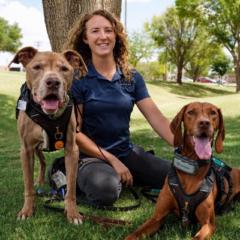
Hello my name is Christina Brewster and I am a professional dog trainer who has a passion on how dogs think and perceive the world. I am a training partner with Chiron K9 and I am a certified Predation Substitution Instructor. The type of dog training I do is off leash detection but a lot of what it takes to have a great and dependable off leash detection dog are skills every dog can benefit from knowing. A big concern for both working dogs and pet dogs is chasing wildlife. A dog that is interested in chasing wildlife can find themselves in dangerous situations. They could run into traffic, they can get their gear caught up in branches, they can become impaled by branches or the animal itself, they can find themselves lost for extended periods, etc. Instead of getting frustrated and suppressing the dog’s quality of life I want to help owners, handlers and other trainers understand what is happening in their dog and how to redirect it in a safe way. “Frustration begins where knowledge ends” - Clinton Anderson
1d •
Csili Had A Big Win Yesterday
She drank water inside of a kennel in the vehicle! This is the first time without me having to spike it with something like tuna juice. Since I have had her she has had bad kennel/vehicle anxiety which I have now concluded is a blend of a conditioned emotional response and learned helplessness. This has been ongoing for over a year, setbacks included, with one month last year where we slept in my Equinox every night. That helped with her relationship with vehicles but not her relationship with the kennel unfortunately. How I am approaching the kennel in the vehicle context is giving her the choice to enter it while I lay in one half of it. We just hang out in the back, the kennel is pushed all the way in with no pressure for her to enter the kennel. Any pressure and she shuts down so it is all at her own pace. I do feed her her meals in the vehicle as well. Her drinking the water shows that she is starting to feel relaxed and safe enough to let her guard down which is very encouraging. What is a win with your dog that from the outside may not have looked like a big deal but actually was?

15d •
Everyone Needs Help. Even Professionals.
I wanted to talk today about something that some people might struggle with and that is asking for help. Perhaps you have been doing this for a number of years, you are on your second, third or fourth dog, you have been part of a team for a while, copious amounts of operations and attend plenty of workshops in person and online. With dedication like that it can sometimes feel like you finally are starting to have a grip on this whole dog handling thing. Then it happens…either you have a new dog that makes you feel like you don’t know anything or your current dog shows a behavior that you have never seen them do. This is when it is important to reach out to a trusted person that you feel is the best fit not only for your concern but also this dog’s learning style. Preferably a trainer that can adapt to the dog in front of them over one that has the approach of “your dog is this breed so you must do this” or “your dog is this discipline so it has to do that”. Running into snags isn’t just for handlers but trainers too. It is through the difficult moments that learning occurs even for us humans. If we want our dogs to enjoy their work and be successful we figure out how to communicate that to them in the best way possible and tailor training to what that dog needs. Do they need steps broken down into smaller ones? Do they need a different direction? Do they need a whole different approach? These questions, and those like them, are why there are so many different ways to train a dog for the same job and it is important to keep an open mind while also having discernment. You may go to a workshop or seminar and hear something that you think is not helpful but a year or two down the line you remember it and it is exactly what you needed to troubleshoot. I had a similar experience recently and, while I cannot go into detail, I can say that it is a benefit to work with people who have many more years of experience than you. Not just quantity of years but quality and variety. Dog training has evolved tenfold in the past 20 years or so with what is accepted as mainstream. Welfare is huge compared to how it use to be and the types of dogs that have access to work has multiplied in ways that very few probably saw coming.
5d •
The Potcake Dog
What happens when humans and dogs simply coexist instead of working together? This question can be answered with the Potcake dog. This breed is found in the Bahamas and is neither wild nor owned, especially in the beginning. Some sources say the breed started 1500 years ago when the Arawak people brought their dogs to the Bahamas then the arrival of settlers introduced their purpose bred dogs many centuries later but we don’t actually know for sure their origin. All of these imported dogs are thought to have interbred with the local dogs and then each other for generations. The Potcake formed over generations not for a job to work alongside humans but to survive despite them and without them. The physical characteristics that developed were only to survive their environment. The smooth coat with no undercoat for the tropical heat, their long faces to help search and forage for food, their athletic builds to help access the terrain and probably most important their robust health to survive with little to no veterinary care. This combination of adaptability has led the Potcake to be able to digest a variety of food without becoming ill and to be flexible to their environment. Their personality is surprisingly compatible with humans given how independent they live compared to most dogs in the world. Their unique living situation has still granted them the opportunity to develop the ability to know which humans may be approachable for food or pets and which ones to avoid. While I have not met one myself, this does not mean every single Potcake you meet will be nice, as they do vary in how feral they are, so be aware if you ever meet one. How the Potcake dog earned their name is from what they were fed. The locals would feed the thickened rice and peas from the bottom of the pot that they would scrape off and feed the dogs that learned to wait by the door. Locally they are known as Sato, Agouti dog and Island Dog but Potcake has become and internationally recognized name that is used by rescue organizations that remove some of the dogs to put up for adoption in an effort to help with local populations.

1-30 of 98
powered by
skool.com/beyond-the-leash-9053
Redirecting prey drive into purpose. Off-leash freedom through Predation Substitution Training
Suggested communities
Powered by