
Write something
Pinned

Sep '25 •
Start here ➜ Latin American markets
This has been working to reach Latinos confidently with a few simple steps. What function of your business may need adjustments to improve in the Latin American market(s)? Which function needs adjustments for Latinos in the US? The offer? The marketing? Sale processes? Customer experience? LTV? Pricing? Knowing this, you take the right actions in the right order. If you want the help of natives for the Latin target audience... We don't pretend to be Latinos. We are Latinos. That is why we know and feel what feels right for Latinos! www.languageglobalsolutions.com
7
0

17h •
Relationship-led tone is key for Spanish-speakers
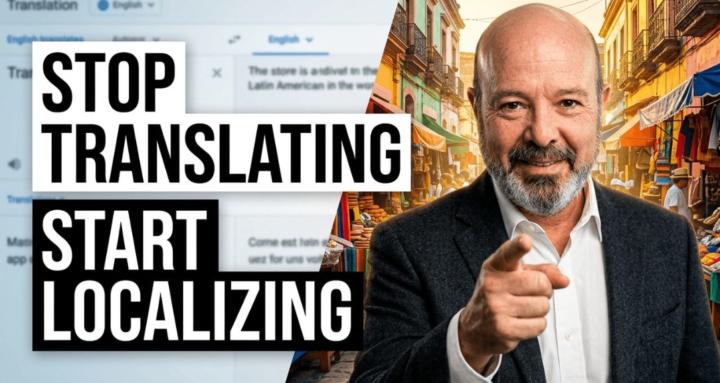
In much of Latin America, business communication is relationship-led before it is transactional. That’s not simply a stereotype about being friendly. It’s a different communication structure. The greeting isn’t just a warm-up before getting to the point. **The greeting is part of the message.** ➣ Asking how someone is doing. ➣ Mentioning the family. ➣ Acknowledging an upcoming holiday. Those aren’t unnecessary words that should be removed for the sake of efficiency. They communicate something important: “I see a person here—not just a transaction.” And perhaps more importantly: “I expect our relationship to continue.” Take those elements away, and the sentence may still be perfectly clear. But it can sound like it came from someone who simply wants something and is in a hurry. A U.S.-style email that opens with the request and closes with a deadline can be clear, efficient, and completely professional in the U.S. But send that same email to a purchasing manager in Monterrey, Bogotá, Buenos Aires, or Santiago, and it may feel much colder than intended. It can even come across like a summons or a notification. And this is one of those cultural differences that can take years to fully understand—and years of explaining and reinforcing. Because both sides believe they are being professional. They both are. They simply have different ideas of what professionalism sounds like. And that’s exactly why localization is about much more than translating words.
0
0
8d •
To your audience ➔ Imported message = Imported brand
If you’re writing Spanish for South America like it’s one market, you’re already losing. South America isn’t “Latin America with one Spanish.” It’s Argentina, Chile, Colombia, Peru, Venezuela, Ecuador, Bolivia, Paraguay—each with its own rhythm, slang, and code. • Argentine Spanish can sound totally different from Mexican Spanish. • Chileans catch “generic” content fast. • In Paraguay, ignoring Guarani means ignoring half the country. The big lesson: don’t write for “Spanish.” Write for the country you want to win. That’s where the trust comes from. What market are you writing for next? PS - Save this for your next campaign or send it to the person approving the copy. 👉 Go to our website and hit the WhatsApp Icon for fast contact
0
0

9d •
How to expand into Latin America
A very common question from companies looking at Latin America is which country they should start with. The answer is that it depends less on the country than on what you're trying to learn. ➡️ If you want volume and you're ready for the complexity, Mexico and Brazil are where the scale lives. Brazil brings Portuguese and a tax system that will take real effort, so it's rarely a soft landing for a first move. ➡️ If you want a proving ground, the smaller markets get underrated. Colombia, Chile, and Uruguay are more straightforward to operate in, and most of what you learn there travels with you. Companies ask which country as though picking correctly is the hard part, when the hard part is that whichever one you pick, you'll have to adapt to it. The real temptation is to run one playbook everywhere and treat the region as a single market. Start where your first real customers already are. That answer is usually sitting in your own data.
0
0

15d •
Subtitles can change the meaning
Your subtitles might be doing more damage than you think. Save this if your videos go to Latin America or other Spanish-speaking markets, because one bad caption can change the meaning, break the instruction, and hurt trust. In this short clip video, I mention 2 of 6 places subtitles go wrong • Meaning • Space • Timing • Safety • Tone • Permanence (Full version in upcoming Course - will be added to the Skool community soon!) The biggest mistake? Treating subtitles like a quick afterthought when, for a lot of viewers, the subtitles are the video. If you're publishing training, marketing, or leadership content in Spanish or Portuguese, this is worth checking before you post. What’s the one caption mistake you see most often? https://languageglobalsolutions.com/ Click on WhatsApp Icon for direct connection with a human. Or connect on WhatsApp via this link https://wa.me/525520477408
0
0
1-30 of 69
powered by
skool.com/global-solutions-6470
Expand and grow into Latino markets with Human Localization - Get it right! Add more clients to your biz!
Suggested communities
Powered by