
Write something
Pinned

Apr 22 •
Welcome to all our new members!!
I just wanted to take a moment to say how excited I am that you’re here. Truly! This space keeps getting more beautiful because of each of you joining ✨ I also want to share something honestly (and a little frustrating on my end 😅): When you request to join, I do see your answer to the membership question, but only once during the approval process. After that, it disappears on my side, which means I can’t go back and personally respond the way I would love to. And if you know me, you know I want to connect with you! So if you’re new here, I’d love for you to reintroduce yourself below: ✨ What drew you to herbalism? ✨ Are you just starting out or have you been on this path for a while? ✨ Is there anything specific you’re hoping to learn? This helps me get to know you better AND create content that actually supports you 💙 Thank you for being here, for caring about the plants, and for being part of this growing community. More goodness coming soon! — Alex
Pinned
Jan 26 •
📌 START HERE. Welcome, Founding Members!
If you’re here already, you found this space early and I’m really glad you’re here. Dakoda Herbals Academy is being built slowly and intentionally. This isn’t meant to be loud, overwhelming, or performative. It’s meant to be grounded, supportive, and rooted in real herbal knowledge, lived experience, and thoughtful conversation. As a founding member, your presence actually helps shape this community - what we focus on, what we go deeper into, and how we grow together. ✨ There’s no pressure to be an “expert” here.✨ Curiosity is welcome! Questions are encourage! Practical, everyday herbalism is the heart of this space. Here’s how to get started (your herbalist roadmap): ✅ Step 1: Introduce yourself in the comments belowTell us: - Where you’re from - What brought you to herbalism - What you’re most excited to learn ✅ Step 2: Head to the Classroom + take History of Herbal Medicine Course : Start Here https://www.skool.com/intro-to-herbalism-2896/classroom (This will walk you through how everything is organized.) ✅ Step 3: Start the FREE Foundations Track. You’ll see 2-3 courses that are completely free to members so you can build a strong base and feel confident right away. ✅ Step 4: Ask questions anytime. Seriously…ask away. There are no dumb questions here. Ever. What to expect inside this community: 🌿 Weekly herbal lessons + terminology 🌿 Plant ID & botany education 🌿 Materia medica deep dives 🌿 Herbal preparations + remedy making 🌿 Fun challenges + mini assignments 🌿 A supportive community of like-minded people Want to go deeper? Once you finish the free courses, you’ll see the option to upgrade into the Premium Herbalist Vault where we go WAY deeper into: - herbal energetics - contraindications + safety - formulation & blending - remedies lab - full materia medica training - But for now… start with the free track and enjoy the journey Thank you for being here at the beginning. This space exists because of people like you 💙
Pinned
Feb 2 •
Weekly Materia Medica Series: Therapeutic Terms (Starting with A!)
I’m so excited to officially kick this off inside our community ✨ Each week, we’ll be diving into Materia Medica through therapeutic terms, one letter at a time, starting with the A’s. This series is designed to help you: - Understand what herbal actions actually mean (not just memorize them) - Confidently read herb monographs and labels - Choose herbs with intention instead of overwhelm - Build a strong foundation that carries into formulation, blending, and safety ✨ How This Will Work Each Week Every week, we’ll focus on 1–2 therapeutic terms from the alphabet and explore them together through: - 🌱 A simple, clear definition - 🧠 What the action does in the body - 🩺 Which systems it supports - 🌿 Common herbal examples - ⚠️ Gentle safety notes or contraindications Why We’re Starting with Therapeutic Terms: You don’t need hundreds of herbs memorized. You need to understand what herbs do. Once you understand actions like alterative, analgesic, adaptogen, or astringent, everything else starts to click! Formulations make sense, herb choices feel intuitive, and confidence grows. This Week: The A’s We’ll begin with foundational “A” terms that show up everywhere in herbalism and Materia Medica.These are actions you’ll see again and again, and once you understand them, you’ll start noticing patterns across plants. ✨ Think of this as learning the language of herbalism. I encourage you to: - Ask questions - Share insights - Connect the dots to herbs you already use - Go slow. Mastery lives in repetition 💬 Comment below if you’re excited to start with the A’s or if there’s a term you’ve always wondered about!
9d •
A 2,500-Year-Old Honey Mystery Has Finally Been Solved!
Sometimes an archaeological mystery does not need a new excavation. It simply needs science to catch up! In 1954, archaeologists excavating an underground Greek shrine at Paestum in southern Italy discovered several bronze vessels containing a mysterious orange-brown, sticky residue with a strong waxy smell. The vessels dated to approximately 530-510 BCE, when the Greek settlement was still known as Poseidonia. Six hydriae and two amphorae had been carefully arranged inside the shrine, suggesting their contents were part of a deliberate offering. Archaeologists initially believed the residue was what remained of honeycomb. Honey was highly valued in the ancient Mediterranean as a food, sweetener, ingredient in medicinal preparations, cosmetic substance, and ritual offering. It also carried associations with the divine, death, regeneration, and immortality. There was only one problem: the science could not prove that honey was present. Over the following decades, three separate investigations examined the residue but failed to detect convincing evidence of honey. Researchers instead proposed that the vessels had contained animal fat, vegetable fat, wax, or resin contaminated with pollen and insect remains. The mystery remained unresolved for roughly 70 years!! A new research team recently returned to the residue with analytical methods that earlier researchers did not have. Using several forms of mass spectrometry, spectroscopy, proteomics, and small-molecule analysis together, they detected: • Hexose sugars, including the kinds of simple sugars abundant in honey • Sugar-degradation products and organic acids • Lipids closely resembling those found in modern beeswax • Peptides connected to the western honeybee, Apis mellifera • Major royal jelly proteins produced in honeybee secretions The residue’s chemical profile was remarkably similar to modern beeswax and showed important similarities to both fresh and experimentally aged honeycomb. Together, these findings provide the strongest direct molecular evidence that the vessels once held honey, most likely offered in the form of whole honeycomb.

17d •
Sympathy & Antipathy in Culpeper’s Herbalism
Happy Monday!! When Nicholas Culpeper published The English Physitian in 1652, he presented plants as part of a living cosmos. Within his system, herbs, organs, bodily processes, and illnesses could all be associated with planetary influences! Two important principles in this approach were known as sympathy and antipathy: 🔥 Sympathy: working through correspondence - In sympathetic treatment, a plant governed by the same planet connected with an organ, bodily function, or condition might be used to support or strengthen it. - For example, an herb associated with Mars could sometimes be used sympathetically for something Culpeper also placed under Mars. The reasoning was that the plant and the condition shared a planetary correspondence. 🌹 Antipathy: working through opposition Antipathy followed a different idea: instead of working with the same planetary influence, the herbalist might choose a plant ruled by a planet considered contrary to the one associated with the illness. Culpeper repeatedly treated Mars and Venus as opposing influences. In The English Physitian, he describes Venus herbs as addressing Venus-related conditions “by sympathy” and certain Mars-related conditions “by antipathy.” In another example, he explains that a Venus herb could benefit the head through its antipathy toward Mars while working sympathetically upon parts governed by Venus. The English Physitian (1652), Graeme Tobyn’s analysis of Culpeper’s planetary assignments This wasn’t quite as simple as: Mars causes the condition, so always use Venus. Culpeper’s reasoning could also consider the affected part of the body, the planet associated with the disease, relationships between planets and signs, the qualities of the herb, and the individual circumstances surrounding the illness. His later astrological medical writing even describes conditions involving Venus and Mars as arising through one influence “by Sympathy” and the other “by Antipathy.” Semeiotica Uranica: An Astrological Judgment of Diseases

1-30 of 59
powered by
skool.com/intro-to-herbalism-2896
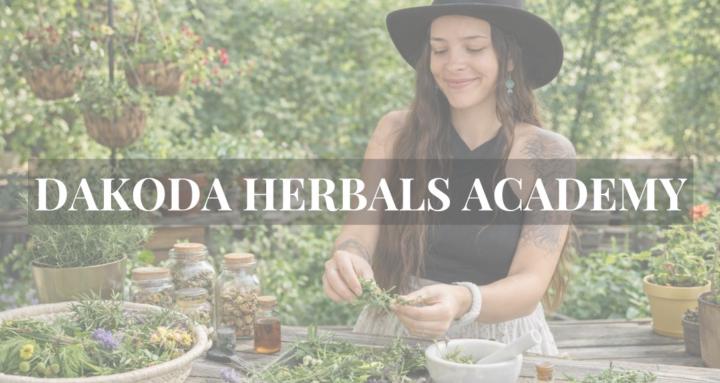
Welcome to Dakoda Herbals Academy, a modern school of plant medicine rooted in tradition, history, and real-world herbal practice.
Suggested communities
Powered by