
Write something

Jul 28 •
Doing It Safe Is Leadership
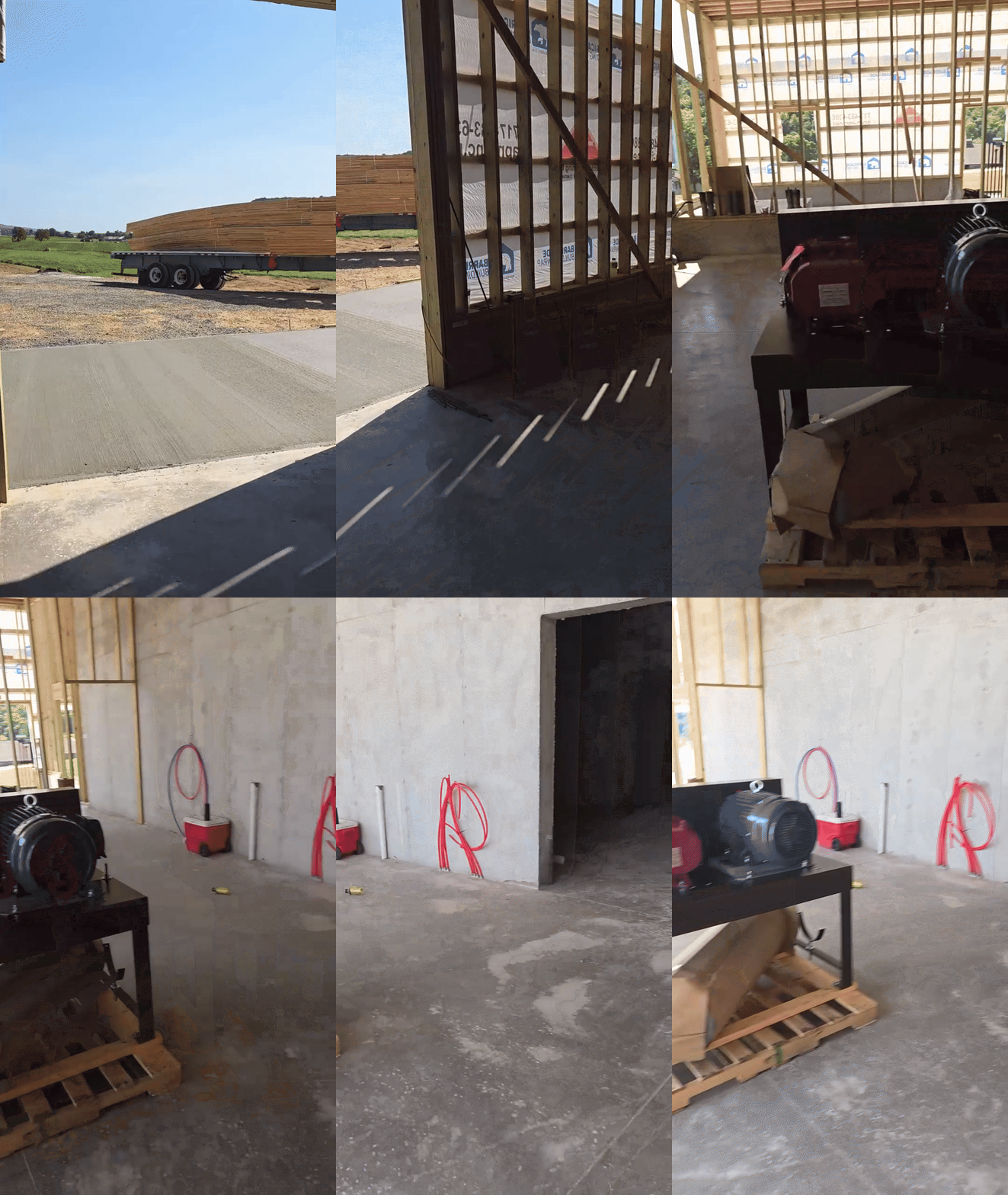
Farming and blue-collar work can be hard on the body. And if we are not talking about cows, equipment, employees, parts, or the weather, sooner or later the conversation usually turns into somebody’s back, knee, shoulder, last doctor visit, or the fact that we have been putting one off for way too long. Too busy. Too expensive. Not helpful. Don’t have time. It’ll probably go away. Whatever the reason, this subject makes its rounds among the “tough.” But I’ve been asking myself lately: Is that actually toughness? Or is it just poor leadership dressed up as toughness? Last week I got a tough reminder of how delicate we really are when we push ourselves too far. We were doing an install on a new parlor and had delivered a 15HP vacuum pump on a stand. There was a telehandler on site, which was a huge help. They had just poured the outside concrete apron where we needed to enter the utility room, and the boom could reach right inside. We had already used it to bring in the next pallet. Then we started opening boxes, sorting parts, and getting ready to move the pump into place. Pallet two was empty. We had dollies and rollers along so we could roll the pump where it needed to go. For whatever reason, I decided it made sense for two of us to lift one end of the pallet so we could slide a dolly underneath. In a few seconds, I learned how dumb that was. We made the lift. We only needed to go up about five inches. My son, Obadiah, tried to push the dolly under the pallet, but he needed just a little more room. So Clayton and I heaved for one more inch. That’s when I felt it. A burst of pain and a popping sensation low in my back. I let go immediately and laid down on the concrete. To be clear, I was scared. I’ve had multiple back issues over the last 20-ish years, but this did not feel like the other times. This felt different. I feared the worst. And there I was, the owner of the company, laying on the floor while two guys watched me with disbelief and probably some fear of their own.
1
0
Jul 11 •
Data Overload: How To Choose The Right Herd Health System For Your Dairy
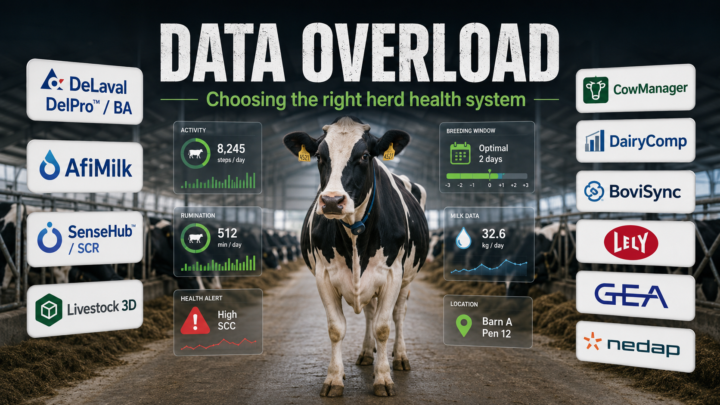
The irony of herd health technology is that the search for better clarity can quickly become its own form of data overload. Most producers begin looking at these systems because they want less guessing. They want to catch sick cows sooner. Improve heat detection. Tighten breeding windows. Manage fresh cows better. Support the team. Use the vet and nutritionist more effectively. Make more confident culling and profitability decisions. But then the shopping process begins. Collars. Ear tags. Pedometers. Cameras. Cloud platforms. Local systems. Milk sensors. Robot data. Parlor integrations. Health alerts. Heat alerts. Cow location. Rumination. Activity. Components. AI analysis. Dashboards. Reports. Apps. Pretty soon, the farm is not just asking, “Which cows need attention?” It is asking, “Which system needs attention?” That is why the first step is not comparing every feature. The first step is deciding what decisions the farm is trying to improve. A good herd health system should not simply give you more data. It should help the right people make better decisions sooner, with more confidence and less confusion. That starts with a few important conversations. 1. Can The Farm Support The System? Before comparing collars, tags, software, or dashboards, start with the basics. Can the farm have reliable internet? Some systems are built around cloud connectivity. Others can operate more locally. If a farm cannot or chooses not to use internet, whether because of location, reliability, or religious reasons, that needs to be respected from the start. This is not a small technical detail. It may immediately change which systems are realistic to install, support, and maintain. A system that looks impressive in a demo can become a source of frustration if the farm infrastructure cannot support it day after day. The right question is not only, “What can this system do?” It is also, “Can this system work reliably here?” 2. Do You Need To Monitor Animals In The Pasture? The next conversation is pasture.
1
0
Jul 3 •
The small misses usually tell the truth first.
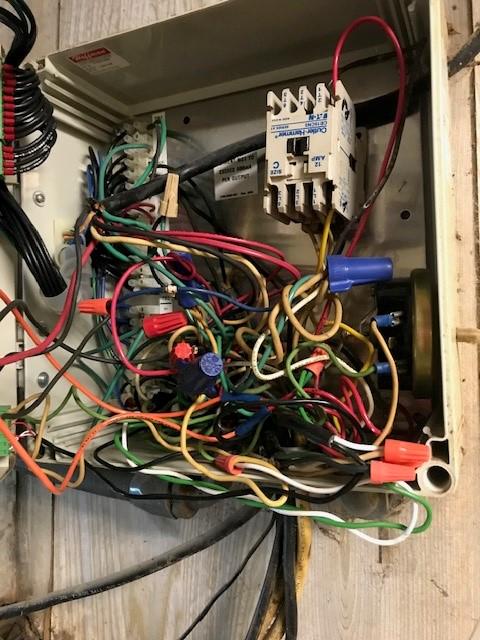
Most problems on a dairy don’t show up all at once. They start as little things. A dip cup not filled quite right. A liner that should have been changed last week. A fresh cow that “seems fine” but isn’t eating like she should. A service call that gets handled, but nobody writes down what changed. A team member who knows the routine, but not the reason behind it. None of those feel like a crisis by themselves. But small misses are often early warning lights. Not proof that someone failed. Proof that the system needs attention. That’s true whether you’re running a dairy, installing equipment, managing route service, or trying to grow a business without everything living in your head. Good owners don’t just ask, “Who missed this?” They ask better questions: What made this easy to miss? Where did our routine break down? Is this a training issue, a communication issue, or a design issue? Do we have a repeatable way to catch this earlier next time? The best farms and service businesses are not perfect. They are observant. They treat small problems as cheap lessons before they become expensive ones. Takeaway: This week, pick one small recurring miss and fix the system around it, not just the symptom.
Jul 10 •
Calendar beats Crisis!
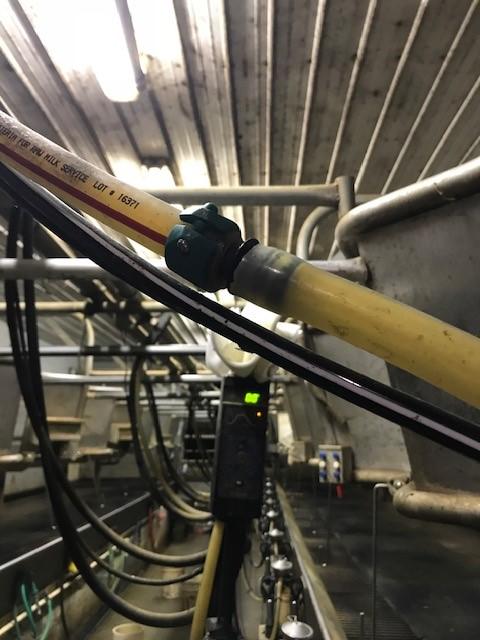
Last week we talked about how small issues become big issues when we don’t have the time, systems, or routines to catch them early. That’s the hard part of running a farm or service business. It’s not that people don’t care. It’s that the urgent stuff keeps getting louder. The trash doesn’t usually get taken out because it’s “scheduled.” It gets taken out because cans are spilling over the top, the bag is overfilled, and now the simple job has become a messy one. The same thing happens in bigger, more expensive ways. This past week, one of our farm customers was dealing with an elevated PI count, which is a bacteria count that can point toward cleanliness, cooling, equipment, or milk contact surface issues. Our route specialist started thinking through possible causes. While looking things over, he noticed the milk hose and asked a simple question: “When was the last time you changed your milk hose?” The answer was one we hear more often than we should: “It’s only been a few years.” So he checked the system. It was 2017. That hose was rated for 12 months and had been on the farm for almost 10 years. Wow. And honestly, that raises a few fair questions. Where did the time go? Why did nobody think of it sooner? Should we have pressed harder since we had the data? Should the farm have had it scheduled on the calendar, the same way inflations are changed on a routine? Here’s the tricky part: the farmer didn’t think the hose was the culprit. Something else had to be causing it. But he decided to try it anyway. A few days later, our route specialist got a text: “I owe you a steak dinner. The PI counts came down immediately!” We love that. We’re thankful for customers who appreciate good work, and we’re always glad when a practical fix helps that quickly. But here’s the bigger point: The real win would have been if the PI count never went up in the first place. That’s what we’re trying to build toward. Not a business where every task waits for a problem prompt. A better question is:
Jul 2 •
Milk Cooling - why it's so important!
This is going to be a brief on cooling milk. Raise your hand if you just love the taste of an ice-cold glass of fresh milk. Ahhhh. For those of you that work with harvesting or producing dairy products, you know first hand the panic that ensues when the tank or chiller isn't cooling. One key thing to learn about this is this rule of thumb. Bacteria in milk will double about every 15 -20 minutes at about 50 deg. F.. This means the following. Safe @ 5000 PI count. In 2 hours, here is where that goes: Starting point =5000, 10,000, 20,000, 40,000, 80,000, 160,000 and after 2 hrs., at 20-minute intervals, we're at a whopping 320,000. Add an additional hour and we're easily above 2.5 million. WOW! And, not to mention, gross! Yeah, I said it. It's gross. But, this is why it matters so much. So, what is your goal for cooling? Set temp? Time to cool? Do you use a plate cooler? Drop a question below and I'll do my best to walk you through any cooling or tank questions to help you be equipped for success on your milk cooling and milk quality! Info from Google search:https://www.journalofdairyscience.org/article/S0022-0302(16)30023-6/fulltext Here is what a quick google search AI result showed: Bacteria in milk reproduce exponentially via binary fission. The rate of growth heavily dictates the shelf-life and safety of the milk and is dictated strictly by storage temperature. [1, 2] - \(< 40^\circ\text{F} \ (4^\circ\text{C})\) (Refrigeration): Growth is radically restricted. Milk can last up to 7–21 days depending on processing. [1, 2, 3, 4, 5] - \(40^\circ\text{F} \ - \ 140^\circ\text{F} \ (4^\circ\text{C} \ - \ 60^\circ\text{C})\) (The "Danger Zone"): Bacteria thrive, with populations doubling in as little as 20 minutes. For example, at \(40^{\circ }\text{F}\) it might take 68 days to reach spoilage levels, but at \(50^{\circ }\text{F}\) (\(10^{\circ }\text{C}\)), it takes just 10 days. [1, 2] - \(> 145^\circ\text{F} \ (65^\circ\text{C})\) (Thermal processing): High heat effectively destroys most bacteria and pathogenic organisms. Standard pasteurization (HTST) holds milk at \(161^{\circ }\text{F}\) (\(72^{\circ }\text{C}\)) for 15 seconds. [1, 2]
0
0
1-9 of 9
powered by
skool.com/the-milk-barn-8263
Join dairy owners, managers & experts sharing real advice, resources & innovation at Milk Barn Dairy Hub. In our community, we aim to encourage you!
Suggested communities
Powered by