Activity
Mon
Wed
Fri
Sun
Nov
Dec
Jan
Feb
Mar
Apr
May
Jun
Jul
Aug
Sep
Oct
What is this?
Less
More
235 contributions to Liberty Politics Discussion

7h •
Hamas on the Streets of Paris”: Israeli Prime Minister Netanyahu Telling it Like it Is
Despite the left attempt at misrepresenting Israeli Prime Minister Netanyahu telling it like it is .... yet again. (Side note notice the similarities between Isreali Prime Minister Netenyahu assessment and the analysis Amoo Jeff has provided for months ? ) Hamas on the Streets of Paris”: Netanyahu Hijacks France Riots to Settle Score With Macron- “Hamas on the Streets of Paris”: Netanyahu Hijacks France Riots to Settle Score With Macron
2d •
FRANCE UNDER ASSAULT: THE WEST MUST NOT SURRENDER TO RADICAL-LEFT VIOLENCE, ISLAMIST EXTREMISM, OR FOREIGN HYBRID WARFARE
DEFENDING A NATO ALLY WHILE PRESERVING AMERICAN STRATEGIC SUPERIORITY France is confronting a national-security crisis that should alarm every nation within the Western alliance. Weeks of escalating unrest, radical-left violence, attacks against law enforcement, destruction of public institutions, and hundreds of millions of euros in reported economic damage have exposed serious vulnerabilities within one of NATO's most consequential member states. Compounding these internal threats are established putin's criminalized counterintelligence state, Chinese Communist Party, and mullah regime remnants intelligence operations, Islamist extremist networks, terrorist-financing infrastructure, and immigration-security failures vulnerable to exploitation by hostile actors. The strategic question is no longer simply how France restores public order, but how the United States and NATO can defend an ally against escalating destabilization without surrendering military superiority elsewhere. My latest Soldiers to Statesmen Foundation assessment examines the following: WHAT THIS ASSESSMENT EXAMINES - The Mathematics of National Destabilization: How relatively small, highly organized militant networks can exploit societal vulnerabilities, generate disproportionate instability, and challenge institutions possessing vastly greater resources. - - - Radical-Left Violence, Islamist Extremism, and Foreign Intelligence Penetration: The documented activities of violent domestic militants, foreign-linked extremist infrastructure, terrorist-financing networks, and the national-security vulnerabilities created by inadequate border enforcement and exploited illegal-immigration routes. - - - Five Weeks of Destruction Across France: The cumulative human, economic, institutional, and cultural consequences of sustained unrest, including injured security personnel, damaged schools, destroyed municipal property, attacked monuments, and widespread commercial losses. - - - NATO Collective Defense and Hybrid Warfare: How Articles 3, 4, and 5 provide different mechanisms for allied security cooperation, including potential responses to sufficiently severe foreign-directed hybrid attacks. - - - Historical Precedents for American Military Assistance: How the Kennedy administration's response to France's 1961 Generals' Putsch, Eisenhower's 1958 intervention in Lebanon, and subsequent allied deployments establish precedents for offering substantial assistance without automatically invoking Article 5. - - - American Ground-Force Capabilities and Military Assistance: An examination of U.S. forces in Europe, specialized military-police organizations, intelligence capabilities, medical support, engineering, logistics, and possible assistance to France under appropriate bilateral authorization. - - - No Strategic Surrender — Preserving Four-Theater Deterrence: How America could examine additional Army Reserve and Marine Forces Reserve capabilities to support France while protecting forces committed to deterring Putin's criminalized counterintelligence state in Eastern Europe, the Chinese Communist Party in the Indo-Pacific, the Iranian regime and its proxies in the Persian Gulf, and North Korea on the Korean Peninsula. - -
1 like • 9h
'RED-GREEN ALLIANCE': Expert warns of riots in France spreading to US
0 likes • 7h
Bibi telling it like it is yet again. (Side note notice the similarities between Isreali Prime Minister Netenyahu assessment and the analysis Amoo Jeff has provided for months ? ) Hamas on the Streets of Paris”: Netanyahu Hijacks France Riots to Settle Score With Macron- “Hamas on the Streets of Paris”: Netanyahu Hijacks France Riots to Settle Score With Macron
2d •
ITALY UNDER ASSAULT: RADICAL-LEFT VIOLENCE, ISLAMIST FUNDAMENTALIST NETWORKS, ILLEGAL-IMMIGRATION THREATS, AND THE AUTOCRATIC BLOC'S CAMPAIGN OF FOREIGN SUBVERSION
DEFEND THE ITALIAN REPUBLIC. EXPOSE THE HOSTILE NETWORKS. PROTECT NATO'S SOUTHERN FLANK. THE WEST MUST NOT YIELD. Greetings, fellow patriot, Italy is confronting a national-security threat that extends far beyond ordinary political demonstrations, exposing the dangerous intersection of radical-left militancy, Islamist fundamentalist terrorist infrastructure, illegal-immigration and transnational criminal networks, and the hostile intelligence operations of the autocratic bloc. The October 17–18 disturbances demonstrated how masked militants could exploit economic grievances to assault Italian law-enforcement personnel, loot businesses, destroy public infrastructure, and disrupt major cities. Italian authorities initially reported 141 injured security personnel, 28 arrests, 43 criminal referrals, and 197 individuals brought to police offices for identification, with further violence and destruction occurring on October 18. Radical-left and antagonistic organizations, including CUA, Crash, and PLAT, have been identified within the wider Bologna protest environment, while separate Italian counterterrorism investigations have exposed alleged Hamas-linked financial infrastructure and ISIS/Daesh-associated radicalization networks. Italy simultaneously confronts organized migrant-smuggling operations across the Mediterranean and documented foreign intelligence threats involving Putin's criminalized counterintelligence state, the Chinese Communist Party, and Iranian regime-associated networks. Although the precise operational relationships between these threats and the October violence remain under investigation, their combined implications for Italian sovereignty, national security, and NATO's southern flank demand serious attention. The Italian Republic cannot afford to surrender its streets to violent militants, its borders to criminal facilitators, its institutions to foreign intelligence penetration, or its strategic future to authoritarian powers determined to weaken the Western alliance.
1 like • 1d
@Jewish Samantha 100 %
1 like • 9h
hmmm notice a difference between the result of Frances flaccid non enforcement offered by "let them eat riots" Marcone as some in yesterday's show insinuated should be adopted and Italy's strong / decisive response offered cartoony super sexy Prime Minister Meloni ? To those who are softly adjacent with the radical left will you please for the love of f-ck stop with your persnicity nonsense you are making Amoo Jeff loose what little hair he has left. Italy takes MAJOR action as France braces for more RIOTS
1d •
ALBANIA UNDER ASSAULT: DEFEND SOVEREIGNTY, EXPOSE FOREIGN SUBVERSION, AND SECURE NATO'S WESTERN BALKAN FLANK
THE WEST MUST NOT YIELD TO VIOLENT DESTABILIZATION, TERRORIST NETWORKS, AUTOCRATIC-BLOC HYBRID WARFARE, OR THE EROSION OF AMERICAN STRATEGIC SUPERIORITY. The escalating security crisis confronting the Republic of Albania is a warning to the entire Western alliance: national sovereignty, constitutional institutions, and NATO's collective security cannot be defended through complacency, political paralysis, or strategic wishful thinking. Between October 13 and 19, 2026, violent offenders exploited broader political demonstrations to attack Albanian law-enforcement personnel, government ministries, judicial institutions, police facilities, and private businesses. Official reporting identified 295 injured individuals, including 186 police officers, during six days of unrest. Meanwhile, Albania faces separately documented threats involving Russian intelligence and influence operations, Chinese Communist Party information penetration, Iranian-sponsored cyberattacks, Islamist extremism, and transnational criminal networks. My comprehensive national-security assessment examines the domestic crisis, the potential intersection with hostile foreign operations, the implications for NATO's Western Balkan flank, and the military and intelligence capabilities necessary to defend our Albanian ally without sacrificing America's ability to deter and defeat aggression across four major strategic theaters. WHAT THIS COMPREHENSIVE ASSESSMENT EXAMINES SECTION I — THE MATHEMATICS OF DESTABILIZATION AND GOVERNMENTAL VULNERABILITY Examines Granovetter's Threshold Model, Chenoweth's 3.5% benchmark, U.S. Army FM 3-24, PMESII–MPECI, and asymmetric-conflict theory to explain how comparatively small groups can impose disproportionate damage upon national institutions, economic stability, and public security. SECTION II — ALBANIA UNDER FIRE: DOMESTIC VIOLENCE AND FOREIGN HYBRID-WARFARE THREATS Breaks down the October disturbances, violent criminal activity, attacks against Albanian police and government institutions, domestic mobilization networks, and the potential exploitation of instability by hostile foreign intelligence organizations.
1 like • 1d
[attachment]
1 like • 9h
Europe riots: Albania BURNS as petrol BOMBS HURLED at police in riots amid France and Italy unrest

10h •
JUSTICE FOR SHANI LOUK — ISRAEL KEPT ITS PROMISE
The IDF has officially announced that the last terrorist involved in the kidnapping of Shani Louk into Gaza has been eliminated. Shani’s name will never be forgotten. What happened to her shocked the world, and her story remains a painful reminder of the horrors of October 7. Israel made a promise to pursue those responsible, and today, that promise has been fulfilled. Shani Louk will be remembered. Her story will not be forgotten. And the promise of justice was never abandoned. 🇮🇱 Follow for more updates. #ShaniLouk #Israel #Justice #October7

2 likes • 9h
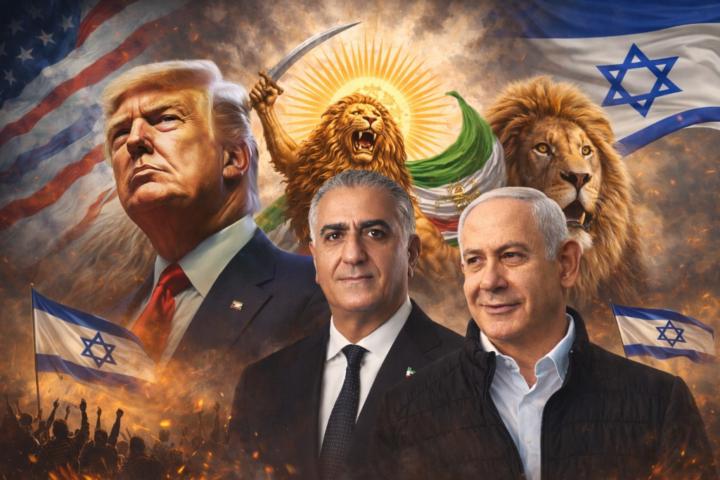
As will all of those who love and support Iranian anti mullah resistance in pursuit of justice against their mullah oppressors / abusers. Ghasam be khoon-e yaran istade-im ta payan / قسم به خون یاران ایستادهایم تا پایان
1-10 of 235
Active 21m ago
Joined Jan 13, 2026
Powered by