Activity
Mon
Wed
Fri
Sun
Nov
Dec
Jan
Feb
Mar
Apr
May
Jun
Jul
Aug
Sep
Oct
What is this?
Less
More
6 contributions to Unbroken Voices

🔥
17d •
Back in 2009, the Obama White House
I'm not a fan of any president limiting media outlets at the White House. But let’s not pretend what Trump is doing to CNN is unprecedented. Especially you, Barack. Over the weekend, Obama claimed he could "never imagine" shutting out a network like Fox News. Really? Because I don't have to imagine it… I HAVE THE TAPE! Back in 2009, the Obama White House literally tried to ban Fox News from a joint pool interview and declared they weren't a "real" news organization. But when Trump calls CNN "fake news" the Left erupts in an uproar? Spare us all the faux outrage. https://x.com/glennbeck/status/2102116548232294750?s=46&t=gT6uLhaVod8uwzT4p6povA

0 likes • 15d
unuder Trump CNN-reporters had no possibility to interview Trump at the white ouse press conference.Under Obama Breitbard had unexpected a heart attack after announcing to publish an article.

23d •
The Sanctuary Is Closed: America’s On-Orbit Space Control Weapons and the Two Adversaries That Forced the Issue
Last week the United States stopped pretending space was a sanctuary. Air Force Secretary Troy Meink told the Air, Space & Cyber Conference that America now has on-orbit space-control weapons capable of defending the joint force against hostile adversary action. It was the first time a senior Pentagon official said the quiet part out loud. The phrasing was deliberate. The capability is not theoretical. The domain that underwrites missile warning, navigation, ISR, and joint command-and-control is no longer treated as a place we merely observe. That admission was forced, not invented. The Chinese Communist Party spent more than a decade building a counterspace force in the open: direct-ascent ASAT units in training, co-orbital inspectors, GEO rendezvous and refueling experiments, and hundreds of ISR satellites designed to find and fix U.S. forces. Putin’s Russia went further into the criminalized dark—matching orbits with American national-security satellites, fielding co-orbital ASAT prototypes, releasing objects on orbit, and treating the heavens as an extension of a counterintelligence state that already murders, sabotages, and lies as policy. Anyone still calling this an “arms race we started” is not reading the threat picture. We are late to a fight our adversaries already funded. I spent twenty years writing that this day would come: policy papers, design elements, and threat assessments arguing that space superiority is not optional once an enemy can hold the joint force at risk from orbit. Deployment is not the end of the argument. It is the start of the one that matters—how we employ, proliferate, and deter without turning the commons into debris. The weapons are on orbit. The question now is whether we have the doctrine, the authority, and the will to use control of space the way we already use control of the air. Jeffrey Damien Cappella President Soldiers to Statesmen Foundation "When the sons of liberty are harmed anywhere it is felt by the sons of liberty everywhere"
3 likes • 22d
so, Israels allies have space-lasers, too?

23d •
I just came to this conclusion, feel free to argue with me
Since the start of modern Zionism, we've been struggling with one thing - reclaiming our pre-exilic selves. I, personally, have been working on it for a few years and I still struggle a lot. There is, after all, 2000 years' worth of intense survival mode to rid myself of. And I just realized, while talking to @Danial Mahdavi, that the Iranian people might be the key to this. That the renewal of the Iranian-Israeli age-old relationship might just be what helps us remember ourselves. The reasoning behind this is that many kings in the past had shown us grace, but only one king and one nation saw as worthy not of grace, but of friendship. The Persian Empire, led by Cyrus the Great, may his memory be a blessing. The Iranian people are the only ones who remember us as the great, strong and noble nation we used to be before exile bended our knees and lowered our heads. Thus, only they can help us remember ourselves as they remember us. All this time we've been struggling along, but maybe all we needed to straighten up was just a friendly hand.
1 like • 22d
I'm struggleing to be allowed alia (return to the homeland) only because I burried a dinausaur bone and a Haplotype Alel on my Y chromosom, but - as I'm German born- the progressive thing is to march into Poland...again! THat said, Like Christians only can be proud overcoming the persecution of jews, by dmitting tat it happened, the reason we jews need to remember a past, that gets censored on youtube due to describing too much gruesome violence, is that we survived, have overcome.B.H. there are Anpnymous Alcoholics, so that people understand, why oovercomuing a problem is admirable.
Sep 7 •
Announcement
Just an announcement that next Sunday I won't be here, and in the next month or so my schedule will be pretty jumbled because of the holidays (during which I don't use any electronics) Thank you for your attention to this matter.
3 likes • Sep 7
I and Tsiporah have the festival Rosh Hashana, we organise together from friday afternoon until sunday night how to controll the Media and Banks and all the thoughts you guys will have during the next year.and 10 days later, also a sunday, we have a second meeting,but we're not yet clear if we decide then which days will have bad weather, or if we do that or Sukkoth...
🔥
Sep 3 •
Cuba is a failed state in every sense of the word.
The puppet dictator Díaz-Canel says that they must reinvent the water supply system in Cuba. Behind a growing demand for the precious liquid, there is total neglect of all infrastructures. They’ve spent 67 years reinventing and haven’t resolved absolutely anything. Cuba is a failed state in every sense of the word. https://x.com/mayrado57466678/status/2095531478704607725?s=46&t=gT6uLhaVod8uwzT4p6povA
1 like • Sep 3
capitalism becomes the biggest enemy of communism/socialism when it stops financing them..
1-6 of 6
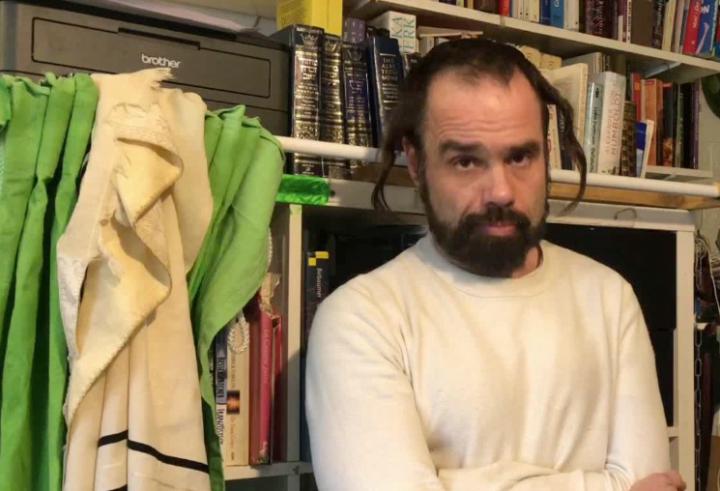
@jehuda-ewert-9546
born in Germany, living in Paris,✡︎ (hareidi, zio-version), occupation:controlling media&weather&your hair
Active 6h ago
Joined Sep 3, 2026
Montrouge france
Powered by