Activity
Mon
Wed
Fri
Sun
Nov
Dec
Jan
Feb
Mar
Apr
May
Jun
Jul
Aug
Sep
Oct
What is this?
Less
More
BioOptimization Collective
373
Free
18 contributions to BioOptimization Collective

13d •
Your Metabolism Has an Age… What’s Yours? 👀
You know your age… but how old is your metabolism? Take the quiz here 👇 https://biocoachbill.com You might be 40, 45, 50 or 60 on paper. But that doesn’t necessarily mean your body is functioning at that same age. We put together a quick Metabolic Age Quiz that helps give you a better look at where you currently stand based on factors that can influence your metabolic health. The interesting part? Your metabolic age could come back younger than you are… or older than you are. And if it comes back older, the point isn’t just to give you a number. It’s to help you start identifying the areas you can actually work on to improve your health, body composition, energy, and longevity. Take the quiz here 👇 https://biocoachbill.com It only takes a few minutes. Then come back to this post and tell us: What’s your actual age vs. your metabolic age? Let’s see who in this group is aging backward. 🔥

1 like • 12d
@Travis Dickey I actually was not stoked about that score. I feel like I am way more active, fit, and strong than most 40 year old men. Most dudes in their 40s are slobs who mouth breathe while walking up stairs.
1 like • 12d
Being honest about my quiz responses though, I can see how it ended up at 40. I have had an extremely active life full of injuries from pushing the edge and having fun. I am wearing out my body and joints. I do everything I can to keep my body feeling younger, but I also fully use my body. Its not meant to sit on a shelf preserved. "A ship is safest in the harbor, but that's not what ships were built for"
15d •
NAD oral verses injecting
What do you think is better. Here is Bio coach Bill answer! Oral NAD+ products have the advantage of being easy, convenient, and better suited for daily use, but NAD+ itself may be poorly absorbed orally, so products often use precursors like NR or NMN that the body converts into NAD+. Injected NAD+ bypasses the digestive tract and delivers NAD+ directly into the body, producing much higher immediate exposure, but it’s more expensive, invasive, and can cause injection-related side effects. The big catch is that while both approaches can affect NAD+ levels, we still don’t have strong human evidence proving that injections produce better long-term health or longevity outcomes than a consistent oral precursor strategy.
1 like • 12d
I've been super interested in NAD+ because of the longevity hype around it. I don't have any first hand recommendations from anyone who feels like its produced a huge effect though. That makes me still on the fence about it. Last year I had a NAD+ injection along with a vitamin IV bag the week before I went to Europe for a mountain biking trip. My buddy that i traveled with got COVID on the flights there and couldn't ride. I was sitting next to him and we had every meal together, so I am sure that i was exposed to whatever he was exposed to, but I didn't get sick. Maybe it was the NAD+? Or maybe it could have been my overall supplement, hydration, and macro protocol.
22d •
Cold & Flu Season Is About To Sneak Up On You — Here's How To Get Ahead Of It
We're heading into the stretch of the year where cold and flu season quietly ramps up. It usually hits hard October through winter, but the groundwork gets laid now, not after you're already sick. Most people wait until they feel it coming, and by then it's not prevention anymore, it's damage control. Here's the difference: prevention means keeping your baseline strong before your body has to fight anything off. That means the fundamentals first, always sleep, hydration, protein, vitamin D, and not running yourself into the ground the way a lot of us do heading into the busier fall and winter months. From a research and educational standpoint, a few peptides come up often in conversations around gut and immune support: - BPC-157 — studied for gut lining integrity and general inflammation modulation - KPV — commonly discussed for calming inflammatory signaling, both gut and skin - Thymosin Alpha-1 — studied internationally for immune regulation, used clinically in some countries None of these are a substitute for the basics, and none of them are a free pass to skip sleep and run yourself down all fall. They're support, not a shield. The mistake I see every single year is the same one: people wait until they're already sick, then ask what they should take. By that point you're managing symptoms, not building resilience. This is educational and research discussion only, not medical advice. 👇 What's your go-to move the moment you feel that first scratchy throat or run-down feeling creeping in? Curious what's actually worked for people in here?
0 likes • 12d
My kiddos both got a back to school bug home with them this month. My wife had it shortly after. My defense strat has been to double up on vitamin c and zinc. They are both already in my daily supplements, but I boost a little more when there is a cold or flu bug making its way through the house. I also pay close attention to my sleep quality and how I feel when I first wake up. If I am extra tired or lagging, I'll either skip the gym completely or go light that day. Skipping the gym and getting an extra hour of morning sleep is tough to do for me mentally. I feel like I'm starting the day being behind and I'm losing progress. In reality, I'm avoiding a cold fully setting in. I'm taking one or two days easy so that I don't end up getting fully shut down being sick for two weeks.
May 18 •
HRV - Do you track yours, and why?
Does anyone here track HRV? If yes, what do you track it with and how do you feel about the accuracy? I've used the Garmin body battery feature for tracking HRV over the past several years. Its been a love/hate relationship. There are days that I feel amazing and it tells me that my body battery is at 5% and I should feel exhausted. On the flip side I'vehad days that my body battery is at 90% + and I feel exhausted. I have spent large amounts of time ignoring HRV entirely for the sake of not letting my watch tell me how I should feel. I do have a few new personal insights on it. My gpt was telling me that its possible that being on TRT and daily caffeine, that there are days that my nervous system has been in fight or flight for weeks on end and that TRT and caffeine are masking the symptoms of fatigue. In one way, I kinda feel like thats the point and my supplements are doing the work that I want them to. On a deeper level, I've steppedback to look at this closer. When I spend too long in a low HRV state, I am more vulnerable to illness, injury, and burnout. My nervous system keeps the final score, whether I want to acknowledge it or not. Through rest, sleep, diet, recovery, and breathing, I have been watching a trend lately. I generally tend to start the week in the 90% range. As the week progresses, I recover a little less and less each day. By Friday I am usually starting the day in the 40% range. A little extra sleep on the weekends and my numbers are back up again. Sure, I'd like the number to be higher all week long, but with work, workouts, parenting, and all the life stressors that are dealt with daily, its definitely draining. Sleep, hydration, and nutrition are huge levers that help my recovery, even when dad life is hectic. Finding the balance of squeezing every ounce out of my days and recovering well enough to do it all over again the next day is Neverending work. Its a puzzle map that I'll continue working on every day for the rest of my life, and HRV is the compass.
1 like • May 19
@Travis Dickey I have a garmin instinct solar that I wear 24/7
1 like • May 24
@Wendy Aguilar I've been very interested in getting a whoop or an oura ring. They seems to provide really great and accurate data from what I have heard. My activity level generally looks like four days of weight training, and two mountain bike rides per week.

1 like • May 18
I've had a very interesting diet shift in the past 3 weeks or so. My cholesterol has been slightly elevated for a long time. Not enough to be concerned about it, but on the high end of the acceptable range for my LDL. My HDL and triglycerides are elite, but LDL has been elevated. After my most recent bloodwork, I decided to ask for a CAC scan to see if I have any plaque in my arteries. It turns out that I do. Its currently mild, and I'm glad that I caught it a 44 years old because I have plenty of time to correct or stop it from ever getting worse. I started using the eato app in January or this year. Its the first time in my life that I've tracked any macros other than protein. What I learned is that fat is sneaky. There is a lot of fat in a lot of foods that I wasn't aware of. After several months of seeing how much vegetable oils, seed oils, palm oil, canola oil, etc are in so many foods that I eat, I finally made a shift to drastically reduce the processed seed oil garbage and increase my fiber. Even when I thought my diet was clean, I was never getting the protein/carb/fiber ratio correct. I often felt slow, heavy, and dumb if I hit my caloric goals for the day because I was only focusing on protein and carbs. Now looking at the full picture, in just 3 weeks, I feel like a new human! Cleaner carbs and protein with sufficient fiber have felt like clean burning fuel for me. Ditching the seed oils has been massive. At the start of April, I was 213.5lbs dry in the morning (15%bf), which was more like 218 hydrated in the afternoon. In just 3 weeks of this diet shift, I'm 205 dry in the morning. 4 days of lifting and 2 days of mountain biking per week. My favorite heart healthy go to meal full of fiber, protein, and carbs has been a bean and veggie salad with salmon on top. Super Filling and clean burning. I feel like its taken me 44 years to figure this out, and I'm stoked that its working so well for me right now. I'm now understanding how important diet is in a way that I never understood before.
1-10 of 18

@sam-rivera-7055
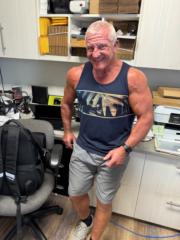
Just a dad trying to be way better than average.
Active 7d ago
Joined Nov 18, 2025
Powered by