
Write something

16d •
She's Black Biracial
Kelly McWilliams is biracial, and she was raised to be proud of her identity, but when she walks into a room, a lot of people perceive her as a white woman. And when she does tell people she’s Black, the situation can get uncomfortable — even scary — very, very fast. https://nyti.ms/4hBWPvk
0
0

26d •
Women’s Commerces in South-America, The Negras de Tabuleiro
~ In eighteenth-century Brazil, Black women were among the most visible participants in the everyday economy of the mining regions. Known as negras de tabuleiro, these women sold food, drinks and other goods from trays and stalls, circulating through streets, markets and areas surrounding the mines. Some were enslaved and were required to surrender part or all of their earnings to their owners; others were free or had obtained their freedom. Regardless of their legal status, their commercial activities gave them access to money and social networks beyond the household in which they lived. Their mobility, however, attracted the attention of colonial authorities. Officials repeatedly attempted to regulate street vending and restrict where these women could sell their goods. A Black woman moving independently through the streets could communicate with enslaved workers, carry information and money between different groups and establish relationships that existed outside the direct supervision of slaveholders. Commerce could therefore create spaces of autonomy within an oppressive system. Selling food might appear economically insignificant, but for enslaved and formerly enslaved women, controlling money and mobility could provide resources with which to negotiate their circumstances and support wider networks of solidarity. ~ Help me uncover and share women’s history. To support me : 🩷 Ko-fi (link in bio) 🩷 Patreon (link in bio) 🩷 Online Shop (link in bio) https://www.facebook.com/share/19fG8Bzxnb/ ~ #history #womenshistory #womenfromhistory
0
0

Aug 12 •
Rappers Delight
August 11 marks the anniversary of Hip Hop, tracing back to a legendary 1973 backyard party in the Bronx, where DJ Kool Herc debuted innovative turntable techniques that would become the foundation of the genre. Six years later, in 1979, The Sugarhill Gang’s “Rapper’s Delight” became the first commercially successful Hip Hop single, bringing the genre to fans everywhere with unforgettable lyrics that have become ingrained in Hip Hop culture.

Jul 30 •
Deeper than Bonnets
Maybe this is an unpopular opinion, but I don’t think Tuskegee banning bonnets and durags creates the kind of environment an HBCU is supposed to have. I understand the argument about professionalism. I really do. But Black students spend most of their lives navigating spaces where they’re told to shrink parts of themselves to fit someone else’s definition of “professional.” An HBCU has always meant something different to me. It’s supposed to be one of the few places where Black students don’t have to constantly code-switch or worry that every part of their culture is being judged. It’s supposed to feel like a safe space. What bothers me isn’t that Tuskegee has a dress code. It’s that the policy feels like it’s asking students to move one step closer to whiteness in the name of professionalism. We have over a century of history showing that respectability has never been a guarantee of dignity. Black people wore three-piece suits during segregation. Black women dressed impeccably during the Civil Rights Movement. They were still denied jobs, denied service, and denied basic human rights. So when people say, “This is about self-respect,” I hear that. But I also hear the old message that if we just present ourselves the “right” way, we’ll be taken seriously. I don’t believe a satin bonnet or a durag determines someone’s character, intelligence, or future. I believe how you treat people, how you show up, and what you contribute says a whole lot more. That’s why this conversation is bigger than bonnets. It’s about what kind of Black spaces we’re trying to build and whether those spaces should ask us to become more like everyone else just to be considered respectable. If you enjoy Rissa SoFar and would like to contribute to the running of my page, please feel free to subscribe.🤎 https://www.facebook.com/rissasofar/subscribenow?surface=pinned_comments
0
0


1-30 of 37
powered by
skool.com/deconstructing-theater-1925
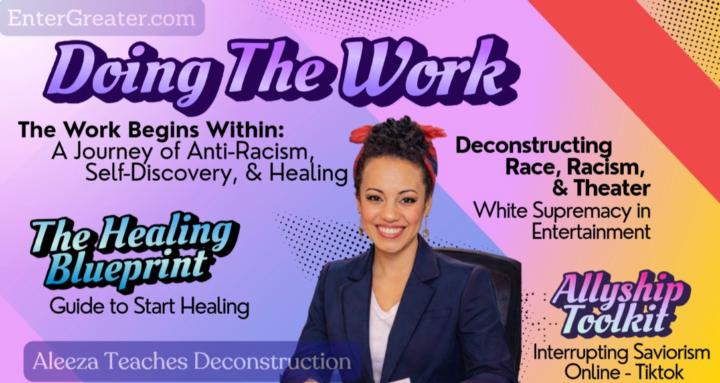
We're deconstructing white supremacy, antiblackness, race, and racism in theater and our daily lives.
Suggested communities
Powered by