
Write something
Pinned
Aug '25 •
💎Welcome! Please Introduce Yourself :)💎
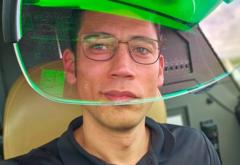
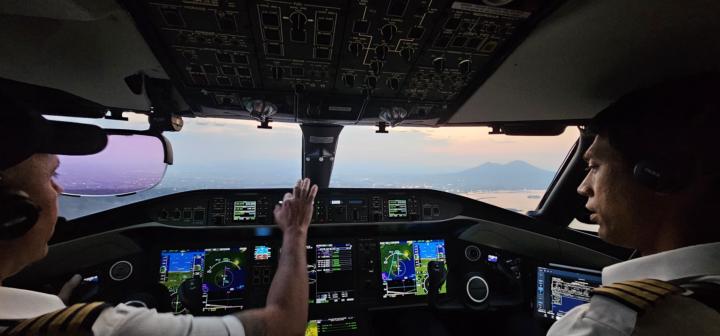
To kick things off, please comment below introducing yourself. Let us know... #1 - Who are you, where are you from and who do you work with? #2 - What do you want to get out of being in this community? #3 - For fun what do you like to do? #4 - Drop a photo of your office space or where you like to do work from. I'll go first... #1 - I'm Jean 👋 A professional pilot who has spent my life mastering the craft. I now work as a chief pilot for a large company in Canada, that operates business jets globally. I am a husband and father of 3, and my passion has been to pursue the Golden Rule, and serve those around me (including my beloved family) with all my skill and passion. #2 - In line with #1, my heart and passion is to give back and pursue the Golden Rule in every way possible. Here on Skool, it means giving back to this awesome community through what I've learned in my 20+ years of professional experience #3 - I'm a creative at heart. When not working you'll find me drafting a kid's story, pictures to go with it, a video for YouTube or perhaps hanging out with my famjam and our community! #4 - see below!
5d •
The paradox shift of a healthy culture
Hope everone is having a fantastic start of the week! Hot on the heels of last week's SMS workshop, we'll be continuing with the CAM schedule this week and getting after HR! First however, I hope this bit is as insightful to you as it was to me! What is, in your opinion, the most important part in achieving "buy in" for a healthy safety culture?

3d •
Domain II: HR Workshop, Part 1 - Recording
Hi everyone! The recording for our HR Workshop is up! Don't forget to head on over to the full post for all the handouts and tools! https://www.skool.com/pilotmasterylab/classroom/a1f837dd?md=93b145b7a67a48b5ae5d0b96b61e7a7e
0
0

3d •
CAM Domain II: HR - Workshop Part 1
One year as assistant chief pilot. Three years as chief pilot. This summer, the Aviation Manager seat. Workshop Calendar Link: Join Here Thursday Aug 21st at 11AM, EST Somewhere in there, the human resources domain of the CAM stopped being exam material and became my Monday morning. Staffing cases. Training matrices that looked immaculate on paper and fell apart the moment you asked a real question. Hiring rooms. Performance conversations I would happily have paid someone else to have. The part I want to tell you about is how I left. When I handed over the chief pilot seat, my assistant chief pilot was the one taking it. So we did not write a handover memo. We built a management of change, with a risk assessment attached: the ongoing issues, the projects still in flight, the recurring meetings somebody had to keep attending, and the concerns that had been left unmanaged, including with regulators. That is a safety instrument. It is what you point at a fleet change or a new type of operation. We pointed it at a leadership change, because that is exactly what a departing chief pilot is. A change to the operation, with hazards attached. And we built it to run in two directions. Laterally, to the person taking my seat, so they inherited the truth instead of the highlights. Vertically, to the management team, so leadership held the priorities as they actually stood, not as everyone assumed they stood. Here is why I am telling you this the day before a CAM session. Most of us were trained to believe HR is an office down the hall. You escalate the problem, somebody else handles it, you go back to flying. So when this domain comes around, it reads soft, and soft material gets skimmed. That is the quiet failure I want you to avoid, and not only for the exam. In a flight department, the person in that seat is the first line of management for every personnel decision made. Hiring criteria, training records, evaluation design, federal employment law. It is a risk domain, and you already know how to work a risk domain.
1
0

5d •
Practicing Debriefing
Hi everyone! I want to build a practice of debriefing, and I hope to make this group a safe place to grow in it together!! If you ask some of our members here ( @Brent Handy , @Mark Laverdiere , @Jack Cuthbert and others) you'll be surprised to see how close humility, gratitude, and growth go hand and hand!! Let's go - 1. Name something that went sideways recently 2. Name one honest thing you're grateful for in that 3. Then ask one question. "How can I grow from this?"

1-30 of 115

skool.com/pilotmasterylab
Aviation isn't about who you know. It's what you're known for. I help pilots become the leaders others want in command. A community you can depend on.
Leaderboard (30-day)
1
+6
2

+5
3
+2
4
+2
5
+1
Powered by